Table of Contents
Choosing between composite decking and natural wood is often treated as a simple question of purchase price. Wood may appear more economical when the first quotation arrives, while composite decking usually requires a higher initial material investment. For a deck expected to remain outdoors for many years, however, the purchase price is only one part of the cost.
Maintenance, cleaning, coating, replacement boards, moisture exposure, surface deterioration and labor can all change the financial picture over the life of the deck.
For homeowners, contractors, landscape designers, distributors and commercial project buyers, the more useful question is therefore not simply “Which decking is cheaper?” It is:
Which material provides the more predictable total cost for the intended project, environment and service period?
This guide compares composite decking and natural wood from a long-term ownership perspective and explains where each material makes practical sense.
Composite Decking vs Wood at a Glance
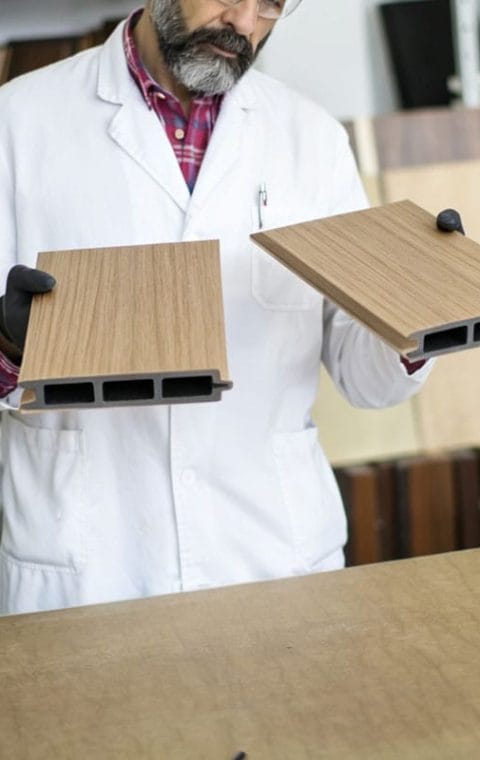
Composite decking and wood decking can both create attractive outdoor spaces, but they behave very differently after installation.
Natural wood is a biological material. Its appearance, moisture behavior and dimensional movement depend on wood species, treatment, climate and maintenance. The U.S. Forest Service explains in its Wood Handbook that wood is hygroscopic, meaning that it exchanges moisture with its surroundings. Changes in moisture content can influence dimensional stability and other physical properties.
Composite decking is an engineered material. WPC, or wood-plastic composite, typically combines wood-based material with thermoplastic polymers and performance additives before being extruded into controlled profiles.
That distinction affects much more than appearance.
| Factor | WPC Composite Decking | Natural Wood Decking |
|---|---|---|
| Initial material cost | Usually moderate to high | Often lower, depending on species |
| Routine staining | Generally not required | Frequently required depending on finish |
| Painting or sealing | Normally unnecessary for the deck board | May be required |
| Moisture behavior | Designed for exterior moisture exposure | Strongly influenced by moisture |
| Splinter risk | No conventional timber splinters | Can occur as boards weather |
| Surface consistency | High | Naturally variable |
| Board geometry | Engineered hollow or solid profiles | Primarily solid sawn lumber |
| Color variation | Controlled by formulation | Natural variation |
| Maintenance labor | Relatively low | Usually higher |
| Long-term cost predictability | Generally higher | Depends strongly on maintenance and climate |
The table does not mean composite is automatically the correct choice for every deck. Premium timber, for example, can provide an appearance and material character that some architects specifically want.
The right decision depends on what the project values most.
Why Initial Price Can Be Misleading
Imagine two quotations for the same terrace.
Wood Deck A costs less to purchase.
Composite Deck B costs more.
If the comparison stops there, wood wins.
But an outdoor deck is not purchased for one day. It is installed to remain exposed to sunlight, rain, temperature changes, foot traffic, furniture, dirt and other environmental conditions for years.
The real calculation is closer to:
Total decking cost = materials + substructure + installation + maintenance + repair + replacement + labor
That formula changes the comparison significantly.
Natural wood may require periodic inspection, cleaning, refinishing, sealing or replacement of deteriorated components depending on wood species and exposure.
Composite decking is not maintenance-free either. It still requires routine cleaning, drainage management and inspection. However, the surface does not normally require the repeated staining or painting associated with many timber deck systems.
This difference becomes increasingly important when labor is expensive or when the project is located far from the owner or maintenance team.
How Moisture Changes the Economics of a Wood Deck
Moisture is one of the most important variables in any outdoor wood system.
The U.S. Forest Service Forest Products Laboratory explains that wood gains and loses moisture in response to temperature and relative humidity. Moisture content influences properties including shrinkage, swelling and dimensional stability.
This does not mean wood cannot perform well outdoors. Proper species selection, preservation, detailing, ventilation and maintenance can produce successful wood decks.
It does mean that the material needs to be designed and maintained with its moisture behavior in mind.
Outdoor conditions can include:
- rainfall;
- high humidity;
- wet-dry cycling;
- poor ventilation beneath boards;
- water trapped around joints;
- contact with wet soil or vegetation;
- pool splash;
- coastal environments.
Where moisture management is poor, maintenance requirements can increase significantly.
This is one reason project buyers comparing natural timber with WPC decking should look beyond the surface appearance of the board.
The complete outdoor environment matters.
What Makes Composite Decking Different?
WPC composite decking is not simply plastic shaped to look like timber.
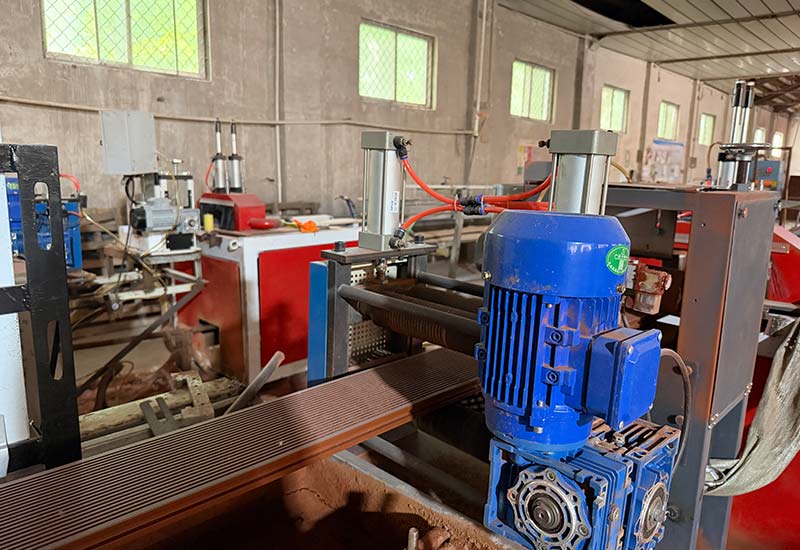
A typical wood-plastic composite uses a mixture of wood-based material, thermoplastic polymer and additives. During extrusion, the material is formed into a controlled board profile.
Manufacturers can therefore engineer several variables:
- overall board dimensions;
- solid or hollow construction;
- internal cavity geometry;
- wall thickness;
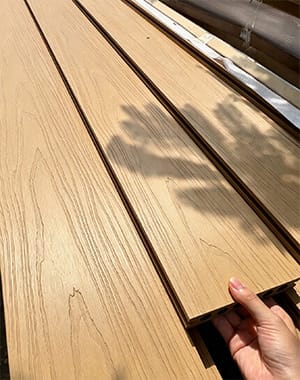
- surface texture;
- color;
- co-extruded surface protection;
- edge design;
- fastening system.
For example, Hengyuan’s current WPC decking range includes multiple outdoor decking structures rather than one universal board.
That matters because the long-term value of composite decking depends on choosing a profile appropriate for the application.
A lightweight residential patio and a heavily trafficked commercial walkway should not automatically use the same board.
Hollow vs Solid Composite Decking and Cost
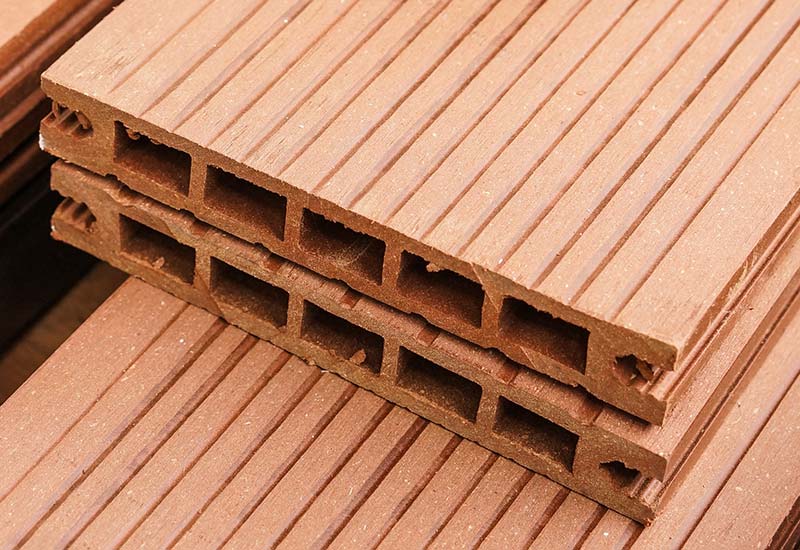
One of the advantages of WPC manufacturing is that the board cross-section can be engineered.
Hollow profiles use internal cavities to reduce board mass and material consumption. Solid profiles use material throughout most or all of the cross-section.
Neither construction should automatically be described as “better.”
Hollow composite deck boards may offer an efficient balance between material use, handling and outdoor performance for many residential applications.
Solid profiles may be considered where projects require a more substantial cross-section or have different structural and traffic requirements.
Hengyuan provides both solid WPC decking and a broader selection of round-hole WPC decking profiles.
Buyers who want a more detailed comparison can also review our guide to round-hole vs solid WPC decking boards.
This matters to cost because specifying more material than a project actually needs can unnecessarily increase the purchase price.
The lowest-cost solution is not always the lightest board, but the most economical specification is usually the one that matches the real loading, support spacing and environmental conditions without unnecessary over-specification.
Maintenance: Where Long-Term Costs Begin to Separate
Maintenance is one of the largest differences between composite decking and wood.
A natural wood deck can require several types of attention over its service life:
- cleaning;
- inspection for damaged areas;
- refinishing;
- stain application;
- protective coating;
- checking fasteners;
- sanding rough surfaces;
- replacing damaged boards.
The frequency depends on the timber species, coating system, weather exposure and appearance expectations.
Composite decking normally removes several of these tasks.
It should still be cleaned periodically, especially where dirt, leaves, food residue or organic material can accumulate. Drainage and ventilation should also remain unobstructed.
However, routine sanding, staining and repainting are generally not part of normal WPC deck maintenance.
For a small residential balcony, this difference may only represent several hours of work.
For a hotel terrace, restaurant deck or commercial landscape project covering hundreds or thousands of square meters, labor becomes a much bigger financial issue.
A Better Way to Compare Decking Costs
Instead of comparing only the price per board or price per square meter, buyers should build a lifecycle comparison.
Consider a hypothetical 100 m² outdoor terrace.
Option A: Natural Wood
The project may include:
- timber boards;
- substructure;
- screws or clips;
- installation labor;
- initial coating if required;
- periodic cleaning;
- periodic refinishing;
- replacement of individual damaged boards;
- maintenance labor.
Option B: WPC Composite Decking
The project may include:
- WPC deck boards;
- joists;
- clips and fasteners;
- edge accessories;
- installation labor;
- routine cleaning;
- occasional replacement if individual components are damaged.
The purchase price of Option B may be higher.
But the owner should estimate the cumulative cost over 5, 10 or 15 years rather than only calculating year one.
The difference becomes even more important in countries where skilled outdoor maintenance labor is expensive.
Does Composite Decking Last Longer Than Wood?
There is no responsible universal lifespan figure for either material.
A claim such as “all composite decking lasts 25 years” or “wood only lasts 10 years” ignores too many variables.
Wood performance depends on factors including:
- timber species;
- preservative treatment;
- moisture;
- ventilation;
- local climate;
- workmanship;
- maintenance;
- contact conditions.
The U.S. Forest Service’s technical information on moisture and dimensional changes in wood shows why moisture management is an important part of designing with timber.
Composite decking performance also varies.
Important variables include:
- formulation;
- board profile;
- manufacturing quality;
- UV stabilization;
- surface technology;
- joist spacing;
- installation gaps;
- drainage;
- load;
- traffic;
- local climate.
This is why buyers should be cautious when a supplier gives an impressive lifespan number without explaining the product specification and application conditions.
A better purchasing question is:
What product configuration is suitable for my expected use and environment, and what maintenance will the complete decking system require?
Composite Decking for High-Traffic Projects
Long-term cost becomes especially important in commercial areas.
Consider:
- hotel pool decks;
- resort terraces;
- restaurant outdoor areas;
- pedestrian walkways;
- commercial landscaping;
- public recreation areas.
The cost of closing these spaces for frequent refinishing can sometimes matter almost as much as the actual maintenance materials.
For these applications, buyers may consider thicker or more substantial composite profiles.
Hengyuan’s guide to heavy duty WPC decking explains why profile geometry, thickness, surface construction and supporting structure should be evaluated together rather than judging a board only by the words “heavy duty.”
Commercial projects should also consider replacement logistics.
If a deck is expected to remain in service for many years, keeping product specifications, color information and profile drawings on record can make future repairs easier.
What About Co-Extruded Composite Decking?
Not all composite decking uses the same surface construction.
Traditional WPC decking exposes the composite material at the surface.
Co-extruded decking adds an engineered protective surface layer around the core during production.
The purpose is generally to provide another level of surface protection and control characteristics such as stain resistance, weather exposure and color retention.
This can increase the purchase price.
Whether that additional cost is justified depends on the application.
Co-extruded boards may be particularly worth evaluating for:
- hotel terraces;
- pool surrounds;
- high-use residential decks;
- humid environments;
- commercial outdoor areas;
- projects where appearance retention is important.
A basic garden deck with moderate use may have different priorities.
Again, a more expensive product is not automatically a more economical product unless the extra performance addresses a real project requirement.
Installation Cost Cannot Be Ignored
Some buyers compare material quotations carefully but treat installation as an afterthought.
This is a mistake.
A decking system performs as a combination of:
board + joist + fastener + spacing + drainage + workmanship.
Even a good composite deck board can perform poorly if installed incorrectly.
Important factors include:
Support Spacing
The joist arrangement must suit the selected profile and intended loading.
A hollow residential board, heavy-duty profile and solid deck board may require different support considerations.
Expansion Allowance
Composite decking experiences dimensional movement as temperatures change.
Installers need to follow the manufacturer’s required side and end gaps.
Drainage
Standing water beneath any decking system is undesirable.
The substructure should allow water to move away rather than becoming trapped.
Ventilation
Air circulation beneath the deck helps manage heat and moisture conditions around the system.
Fastening
Hidden clips, screws and edge finishing should be compatible with the board design.
Poor installation can erase much of the lifecycle benefit that buyers expect from composite decking.
Is Wood Still the Better Choice for Some Projects?
Yes.
Composite decking is not the universal answer to every outdoor project.
Natural wood may be preferred when:
- authentic natural grain is the main design priority;
- a specific timber species is required by the architect;
- the project is historically sensitive;
- short-term initial cost is the dominant constraint;
- owners are comfortable with ongoing maintenance;
- local timber is readily available and cost-effective.
High-quality timber can create exceptional outdoor architecture.
The point of a composite-versus-wood comparison is not to declare one material universally superior.
It is to match the material with the project.
When Does Composite Decking Make More Financial Sense?
Composite decking becomes particularly attractive when several of the following conditions apply.
Maintenance Labor Is Expensive
Repeated staining, sanding or treatment can make timber ownership more expensive over time.
The Project Is Difficult to Access
A rooftop terrace, resort or remote commercial site can be expensive to close and maintain repeatedly.
Moisture Exposure Is Frequent
Pool surrounds, humid climates and exposed landscapes place greater emphasis on moisture management.
Consistent Appearance Is Important
Large commercial projects often need uniform profiles, colors and surface finishes.
The Owner Wants Predictable Maintenance
Properties managed by hotels, residential developments or commercial operators may prefer materials that require fewer recurring finishing operations.
In these situations, paying more initially may reduce uncertainty later.
What Should B2B Buyers Compare Before Ordering?
For distributors, contractors and project buyers, comparing composite decking prices without standardizing specifications can lead to misleading conclusions.
Two quotations labelled “WPC decking” may refer to completely different products.
Before comparing suppliers, request the same information from each manufacturer.
| Specification | Why It Matters |
| Board width and thickness | Determines actual profile dimensions |
| Hollow or solid design | Affects weight and intended use |
| Cross-section drawing | Reveals cavity and rib geometry |
| Weight per meter | Helps compare physically different profiles |
| Surface type | Influences appearance and surface characteristics |
| Co-extrusion structure | Identifies capped vs conventional construction |
| Standard length | Affects layout and freight |
| Recommended joist spacing | Important for project design |
| Clip system | Affects installation |
| Color options | Important for project approval |
| Packaging | Important for export and site handling |
| MOQ | Affects purchasing strategy |
| Customization | Relevant to distributors and private-label orders |
A quote with a lower price per meter may not actually be cheaper if the board is narrower, lighter or based on a different specification.
Always normalize quotations before making a purchasing decision.
Cost per Square Meter Is More Useful Than Cost per Board
This is particularly important for international buyers.
Suppose Supplier A offers a 140 mm board and Supplier B offers a 150 mm board.
Comparing price per piece is almost meaningless if the length, width, weight and installation coverage differ.
A better comparison calculates:
board price + accessories + installation coverage + expected waste
Then convert the result to a comparable cost per square meter.
For large orders, container utilization should also be considered.
Board density, length, packaging and pallet design all affect how much saleable decking can be loaded into a shipment.
This means the cheapest factory unit price is not always the lowest landed project cost.
Composite Decking vs Wood for Different Applications
Different projects create different economic priorities.
| Application | Key Cost Consideration | Material Decision |
| Small home patio | Initial budget + maintenance preference | Both can work |
| Pool surround | Moisture + cleaning + surface | Composite often worth evaluating |
| Rooftop terrace | Access + weight + maintenance | Project-specific |
| Hotel deck | Downtime + appearance + maintenance labor | Composite has strong advantages |
| Public walkway | Traffic + structural specification | Heavy-duty system may be needed |
| Luxury villa | Appearance + lifecycle + design | Depends on design objective |
| Coastal project | Moisture + weather exposure | Detailed material evaluation needed |
| Temporary structure | Short service period | Wood may remain economical |
This is why there is no meaningful answer to “Which decking is cheapest?” without first defining the project.
Five Common Costing Mistakes
1. Comparing Only the Board Price
A deck is a system, not a stack of boards.
Include joists, fasteners, accessories, installation and waste.
2. Ignoring Maintenance Labor
Labor can become a major lifecycle cost, especially for commercial spaces.
3. Assuming Every Composite Board Is Equivalent
Different WPC formulations, profiles and surface systems can have significantly different costs and intended uses.
4. Buying the Heaviest Board Automatically
More material does not necessarily equal better value.
A product should fit the actual load and application.
5. Ignoring Installation Requirements
Incorrect spacing, drainage or fastening can create avoidable problems regardless of which material is selected.
How to Choose Between Composite Decking and Wood

A practical decision can be made by answering seven questions.
1. How long is the deck expected to remain in service?
A short-term installation and a long-term commercial property should not use the same financial assumptions.
2. Who will maintain it?
If professional maintenance teams are expensive, recurring timber treatment becomes more significant.
3. How wet is the environment?
Consider rainfall, humidity, pools, irrigation and drainage.
4. How much traffic will the deck receive?
A private balcony and hotel terrace have different demands.
5. Is natural timber authenticity essential?
If yes, maintenance may be accepted as part of the design choice.
6. How important is appearance consistency?
Composite production can provide controlled profiles and colors, while natural timber intentionally varies.
7. Are you calculating initial cost or lifecycle cost?
This final question often changes the result.
Why Total Cost of Ownership Matters for Importers
For an importer or distributor, long-term cost has another dimension: customer satisfaction.
A product with the lowest factory price can become expensive if it creates:
- excessive installation complaints;
- inconsistent profiles;
- difficult replacement;
- unexpected surface performance;
- packaging damage;
- missing accessories;
- unsuitable board selection.
Professional sourcing therefore means evaluating the complete supply system rather than negotiating only the board price.
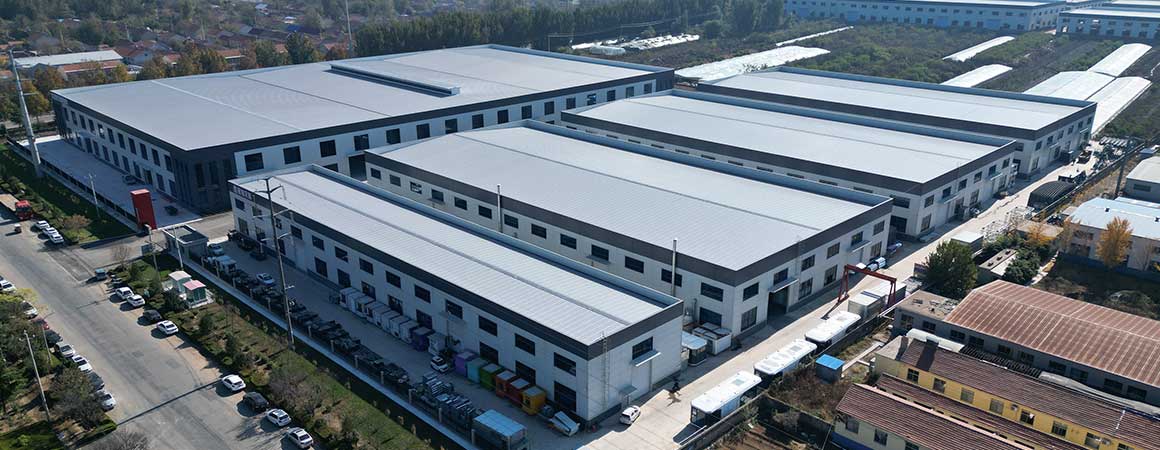
Hengyuan manufactures WPC products for residential, commercial and landscape applications, with options including hollow, solid, conventional and co-extruded profiles. Buyers can explore the full WPC product range before choosing a decking structure.
For bulk projects, samples and cross-section details should ideally be reviewed before a large order is confirmed.
Frequently Asked Questions
Is composite decking cheaper than wood?
Composite decking is often more expensive at the initial purchase stage. However, the long-term comparison can change once staining, refinishing, maintenance labor and potential board replacement are considered. The result depends on wood species, composite specification, local labor costs and project lifespan.
Does composite decking require maintenance?
Yes, but the maintenance is generally different from wood. Composite decking normally requires routine cleaning and inspection rather than repeated staining, sealing or painting. Drainage and ventilation around the decking system should also be maintained.
Is WPC decking waterproof?
WPC decking is designed to provide high moisture resistance, but calling an entire deck system “completely waterproof” can be misleading. Joints, substructure, drainage, fastening details and installation gaps remain important.
Is solid composite decking better than hollow decking?
Not necessarily. Solid profiles can provide a more substantial cross-section, while hollow decking may offer efficient material use and easier handling. Selection should be based on traffic, span, support structure and application rather than assuming one profile is always superior.
Is composite decking good for commercial projects?
It can be. Hotels, resorts, restaurants, walkways and other commercial spaces may benefit from reduced routine finishing requirements and consistent manufactured profiles. However, the board structure and supporting system must be selected for the expected use.
Why is some composite decking much more expensive?
Price differences can reflect profile dimensions, material quantity, solid versus hollow construction, surface technology, formulation, packaging, accessories and manufacturing requirements. Buyers should compare standardized specifications rather than only unit prices.
How can I get an accurate WPC decking quotation?
Provide the manufacturer with the installation area, application, board preference, estimated quantity, required length, color, destination and any customization requirements. Hengyuan buyers can contact our WPC team to discuss samples, specifications and project quotations.
Conclusion
Composite decking does not always cost less than wood on the day it is purchased. In many cases, the opposite is true.
Its financial advantage becomes clearer when a project is evaluated over time.
Natural wood can provide genuine material character and a lower initial price, but its economics depend on species, outdoor exposure, moisture management and the level of maintenance required to preserve the desired appearance and performance.
Composite decking shifts more of the investment toward the beginning of the project while reducing several recurring finishing requirements associated with timber.
For homeowners, contractors and commercial buyers, the correct calculation should therefore include not just the cost of buying a board, but the cost of owning the deck.
The best-value material is ultimately the one that matches the project’s expected service period, climate, traffic, maintenance resources and design goals.
If you are planning an outdoor terrace, pool deck, commercial landscape or distribution order and need help comparing board structures, explore Hengyuan’s WPC decking solutions or contact Hengyuan for product specifications, samples and quotation support.