Table of Contents
Introduction
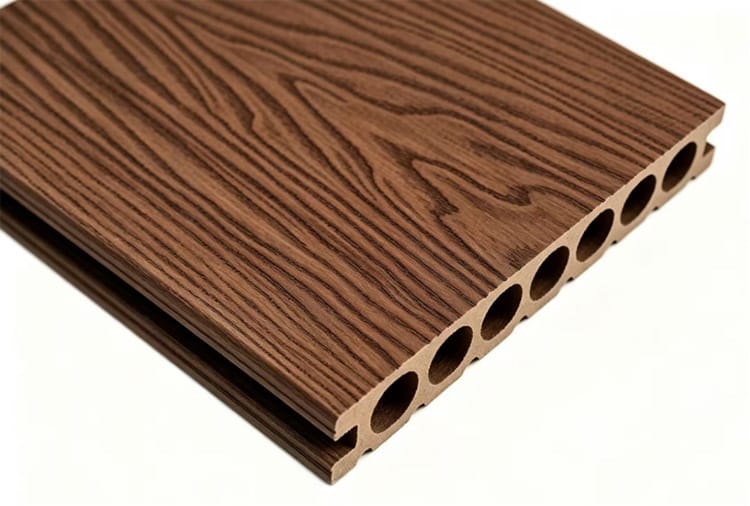
Heavy Duty WPC Decking is designed for outdoor projects where ordinary residential-use decking may not provide the most appropriate combination of profile thickness, structural design, surface durability and long-term service requirements. Commercial terraces, public walkways, resort landscapes, park paths and frequently used outdoor areas often place greater demands on a decking system than a small private balcony or garden deck.
However, the term “heavy duty” should not be understood as a single standardized board type. Heavy-duty composite decking can include thicker hollow profiles, reinforced round-hole structures, solid WPC decking boards and advanced co-extrusion products. The correct choice depends on expected traffic, board span, supporting structure, outdoor exposure, surface requirements and the complete installation system.
For buyers, contractors and distributors evaluating commercial WPC decking, the key points include:
- Board profile and overall thickness
- Hollow, round-hole or solid construction
- Expected pedestrian traffic and project use
- Joist spacing and supporting structure
- Surface wear and outdoor weather exposure
- Co-extrusion or conventional WPC surfaces
- Fastening and edge details
- Relevant technical documentation and testing
Understanding these factors makes it easier to distinguish genuinely suitable heavy-duty decking from a board that is simply marketed using a stronger-sounding product name.
What Is Heavy Duty WPC Decking?
Heavy Duty WPC Decking is a category of wood-plastic composite decking intended for outdoor spaces where the project places greater emphasis on structural stability, repeated use and long-term outdoor performance.
Like other WPC decking boards, it is generally produced from a combination of wood-based material, thermoplastic polymer and performance additives. What makes a board suitable for more demanding applications is not the WPC material alone, but the way the material is engineered into a specific profile.
A heavy-duty profile may use greater overall thickness, stronger outer walls, reinforced internal ribs, a more substantial hollow structure or a solid cross-section. Surface construction can also vary, with traditional embossed WPC and co-extruded composite decking addressing different combinations of appearance, wear and weather exposure.
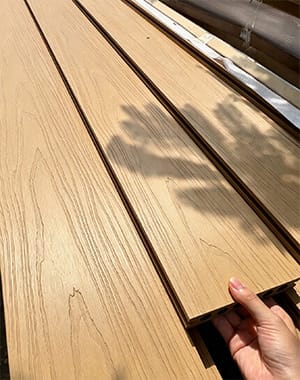
Hengyuan’s Heavy Duty WPC Decking is one example of this category. It uses a 140 × 25 mm seven-round-hole profile with a 3D wood-grain embossed surface and is positioned for higher-traffic outdoor and commercial applications.
Rather than assuming every project needs the heaviest possible board, buyers should compare the profile with actual installation conditions.
Where Is Heavy Duty WPC Decking Commonly Used?
Heavy-duty composite decking becomes particularly relevant when a deck experiences frequent pedestrian movement, repeated outdoor exposure or more demanding operational conditions.
Commercial outdoor terraces are one common example. Restaurants, hotels, resorts and hospitality spaces can receive substantially more daily foot traffic than a private garden deck. In these environments, the decking specification needs to consider not only visual appearance but also board profile, supporting structure, fastening and surface wear.
Public walkways, parks and landscape pathways present another important application. These areas often experience continuous pedestrian movement and may remain exposed to rain, sunlight, temperature variation and dirt throughout the year. USDA Forest Service research notes that outdoor wood-plastic composites are exposed to factors including moisture, UV light and biological deterioration, which is why material formulation and long-term outdoor performance need to be evaluated together rather than treating WPC as completely unaffected by the environment.
Heavy-duty WPC decking can also be considered for pool surrounds, rooftop terraces, viewing platforms, commercial balconies and other outdoor flooring projects where the specification requires more than a basic residential decking profile.
The application should always determine the board—not the other way around.
Heavy Duty Hollow WPC Decking vs Solid WPC Decking
One of the most important decisions is whether a demanding project actually requires solid WPC decking or whether a properly designed heavy-duty hollow profile is sufficient.
A common misunderstanding is that hollow means weak and solid automatically means strong. In practice, profile engineering is more complicated.
Heavy-duty hollow WPC decking uses internal cavities while retaining engineered outer walls and reinforcing ribs. A well-designed round-hole profile can reduce unnecessary material and board weight while maintaining a cross-section intended for demanding outdoor applications.
Solid decking contains substantially more material throughout its cross-section. It is often considered where greater board mass, concentrated loading or particularly demanding service conditions are important, but it is also heavier to transport and handle.
| Comparison Factor | Heavy Duty Hollow WPC Decking | Solid WPC Decking |
|---|---|---|
| Internal structure | Reinforced hollow or round-hole profile | Solid cross-section |
| Board weight | Generally lower | Generally higher |
| Material use | More efficient | Greater material volume |
| Site handling | Usually easier | More demanding |
| Commercial use | Suitable when profile is properly specified | Often considered for demanding areas |
| Installation | Requires correct joist and end support | Also depends on correct substructure |
| Transportation | Lower board mass can help logistics | Higher shipping weight |
| Selection basis | Profile design + project conditions | Structural demand + project conditions |
The useful question is therefore not simply “hollow or solid?” It is whether the selected decking board has the dimensions, cross-section, performance information and installation system required by the project.
Buyers can compare Hengyuan’s broader WPC Decking range rather than restricting the specification to one structure before project conditions have been evaluated.
Why Round-Hole Profiles Are Used for Heavy Duty WPC Decking
Round-hole WPC decking contains circular cavities running longitudinally through the board. The geometry removes material from parts of the cross-section while leaving surrounding walls and structural sections that contribute to the overall profile.
For heavy-duty applications, a round-hole profile can be made more substantial through greater board thickness, cavity geometry and surrounding wall design.
Hengyuan’s standard Hollow WPC Decking uses a 148 × 23 mm seven-round-hole configuration, while its Heavy Duty WPC Decking uses a thicker 140 × 25 mm seven-round-hole profile. This provides a practical example of how products within the same round-hole category can be engineered differently for different applications.
This distinction is important for SEO content as well as purchasing decisions because terms such as round hole WPC decking, hollow composite decking and heavy duty WPC decking describe overlapping but not identical product categories.
A buyer should therefore request the cross-sectional drawing rather than comparing products only from top-view photographs.
What Makes WPC Decking Suitable for High-Traffic Areas?
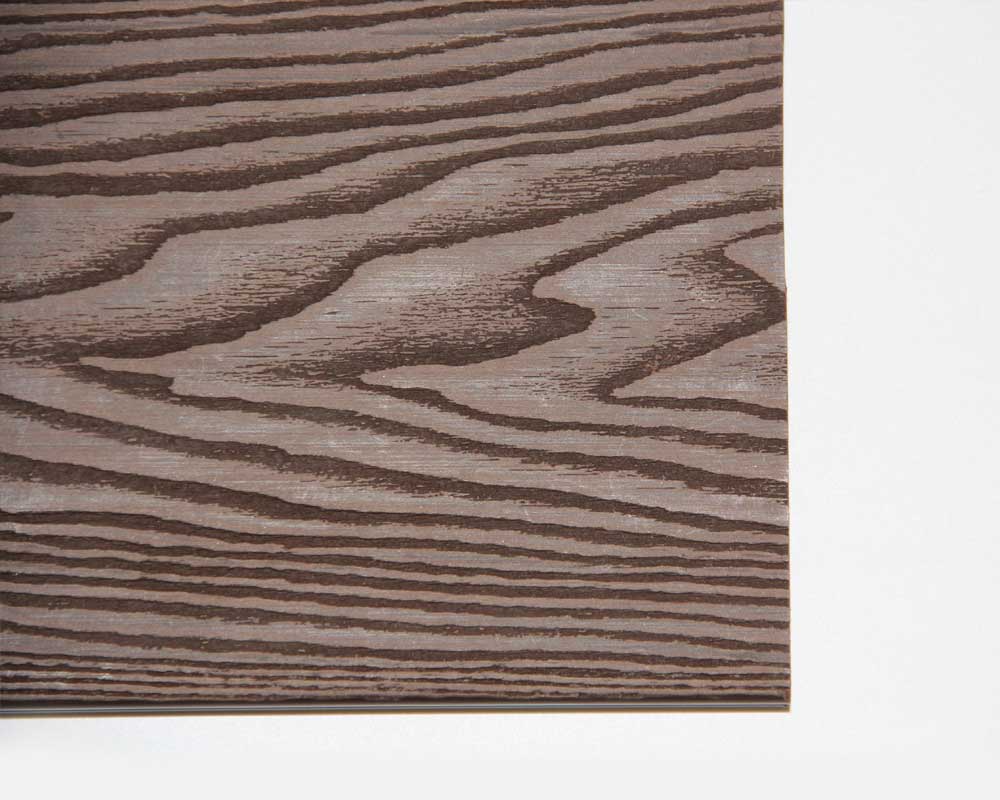
High-traffic decking should be evaluated as a complete construction system.
Board thickness is important, but it is only one factor. Structural behavior also depends on outer wall thickness, internal ribs, material formulation, profile geometry, board span and supporting structure.
Surface design also matters. Repeated pedestrian use exposes a decking surface to footwear, dirt, sand, moving furniture and routine cleaning. A heavily used restaurant terrace may therefore create different surface requirements from a residential balcony even if both use similar board dimensions.
Outdoor exposure adds another layer of consideration. USDA Forest Service research on WPC materials shows that moisture and weathering remain relevant factors in long-term outdoor service, reinforcing the importance of appropriate material formulation, surface design and installation rather than relying solely on generic durability claims.
For commercial outdoor decking, project teams should therefore evaluate structural and environmental requirements together.
Heavy Duty WPC Decking vs Standard Outdoor Composite Decking
Not every outdoor project needs heavy-duty boards.
Standard outdoor composite decking can be suitable for balconies, garden patios, residential terraces and many general landscape applications where pedestrian use is relatively moderate.
Hengyuan’s Outdoor Composite Decking provides a useful comparison. It uses a 138 × 22 mm seven-round-hole co-extrusion structure and is designed for applications including terraces, balconies, poolside spaces and commercial walkways.
Heavy Duty WPC Decking, by comparison, uses a thicker 140 × 25 mm round-hole profile.
The distinction should therefore be considered from several perspectives.
| Project Requirement | Standard Outdoor Composite Decking | Heavy Duty WPC Decking |
| Residential balcony | Often suitable | May be unnecessary |
| Garden terrace | Often suitable | Useful where traffic is higher |
| Restaurant terrace | Depends on project | Frequently worth evaluating |
| Public walkway | Project-specific | Strong candidate |
| Resort landscape | Suitable for many areas | Useful for busy circulation zones |
| High pedestrian traffic | Requires detailed assessment | Designed around more demanding use |
| Board handling | Generally lighter | Profile may be thicker/heavier |
| Selection priority | Versatility and outdoor performance | Higher-use project requirements |
This comparison prevents over-specification as well as under-specification.
A small private deck does not automatically become better because the thickest available board is used. Likewise, selecting a lightweight residential profile purely to reduce initial material use may not be appropriate for a busy commercial space.
Heavy Duty Composite Decking and Co-Extrusion Technology
Another important distinction is between traditional WPC surfaces and co-extruded composite decking.
Co-extrusion adds an outer protective layer around the composite core during manufacturing. This allows the surface and structural core to be engineered for different functions.
For heavily used exterior spaces, surface resistance can be particularly important because the deck may encounter repeated foot traffic, dirt, sunlight and weather exposure.
Hengyuan’s current WPC Decking category includes conventional WPC profiles alongside ASA and other co-extrusion decking products, allowing project buyers to compare not only internal structures but also different surface technologies.
The decision between traditional embossed Heavy Duty WPC Decking and heavy-duty co-extrusion decking should therefore consider the project environment, desired appearance, traffic level and surface-performance requirements.
It should not be made from the word “premium” or “heavy duty” alone.
Key Specifications to Compare Before Ordering
A professional RFQ for Heavy Duty WPC Decking should contain more than width, thickness and color.
The buyer should request enough information to understand how each board differs structurally and how it is expected to be installed.
Board Dimensions and Cross-Section
Overall width and thickness provide the basic dimensions, but a detailed cross-sectional drawing provides much more useful information.
For hollow heavy-duty decking, buyers should examine cavity geometry, wall dimensions, internal ribs and side-groove design.
Weight per Meter
Board weight helps buyers understand material distribution and logistics.
It can also be useful when comparing two similarly sized composite decking boards, although weight alone should never be treated as proof of structural capacity.
Recommended Joist Spacing
The distance between supporting joists has a direct relationship with how the decking board is supported.
A heavy-duty board should not be installed using spacing copied from an unrelated product.
Surface Construction
Buyers should identify whether the product uses conventional extrusion, embossing, brushing, co-extrusion or another surface system.
Surface specifications become increasingly important in high-traffic commercial decking.
Available Lengths
Board length affects joints, material cutting, wastage and container planning.
Hengyuan’s Heavy Duty WPC Decking is currently offered in 2.9 m, 3 m and 4 m lengths, with customization available.
Relevant Testing
For projects subject to technical or regulatory requirements, buyers should ask for relevant testing or supporting documentation rather than relying on general descriptions such as “strong” or “commercial grade.”
ASTM D7032 establishes procedures for developing performance ratings for wood-plastic composite and plastic lumber used for exterior deck boards, stair treads, guards and handrails.
The specific standards required will depend on the destination country, project type and local requirements.
Heavy Duty WPC Decking for Commercial Projects
Commercial decking selection usually involves more stakeholders than a residential project.
Architects may focus on visual consistency and material specification, contractors need predictable installation, developers consider lifecycle requirements, distributors need standardized product information, and facility managers care about cleaning and ongoing use.
This makes documentation especially important.
A commercial WPC decking supplier should be able to discuss the exact board profile, available dimensions, surface options, colors, installation components, packaging and customization rather than responding to every project with the same generic decking recommendation.
For larger developments, it is also useful to divide the project into different traffic zones.
A hotel project, for example, may contain private balconies, restaurant terraces, poolside areas and main public circulation paths. There is no requirement for every area to use exactly the same WPC decking board.
Moderate-use zones might use a standard outdoor composite profile, while heavily trafficked sections can be evaluated for Heavy Duty WPC Decking or another reinforced product.
This specification-by-zone approach can create a more rational decking system.
Installation Matters as Much as Board Strength
Even well-designed heavy-duty composite decking depends on correct installation.
A thicker board cannot compensate for an unsuitable foundation, excessive joist spacing, blocked drainage or poorly positioned board-end joints.
The substructure must provide consistent support. Decking layouts should consider board direction, joint locations, perimeter details and drainage before installation starts.
Thermal movement also needs to be accommodated. Because WPC contains thermoplastic material, installers should follow the gap requirements provided for the specific board and local installation conditions.
Fasteners and clips are another important part of the system. Hidden clips should fit the board’s side groove correctly and maintain the intended spacing between boards.
For heavier-use commercial decking, installers should also pay particular attention to transitions, stairs, perimeter areas, entrances and locations where wheeled equipment or concentrated pedestrian circulation may occur.
Heavy-duty performance is therefore achieved through the board and installation system together.
Heavy Duty WPC Decking Selection Checklist
Before finalizing a commercial or high-traffic decking order, the following information should be reviewed.
| Selection Item | Questions to Confirm |
| Application | Residential, commercial or public space? |
| Traffic level | Occasional, regular or high pedestrian traffic? |
| Board profile | Round hole, square hole or solid? |
| Dimensions | What are the exact width and thickness? |
| Cross-section | How are walls, cavities and ribs designed? |
| Surface | Traditional WPC, embossed or co-extruded? |
| Outdoor exposure | Sun, rain, poolside or covered area? |
| Joist spacing | What does the manufacturer recommend? |
| Board length | Which lengths reduce joints and cutting? |
| Fastening system | Which clips and screws are compatible? |
| Edge details | How are exposed ends and fascia finished? |
| Testing | What technical documents are available? |
| Customization | Are colors, lengths or profiles customizable? |
| Packaging | Is packaging suitable for export and site handling? |
Using this checklist helps shift purchasing discussions away from generic terms and toward measurable project requirements.
How to Choose a Heavy Duty WPC Decking Supplier
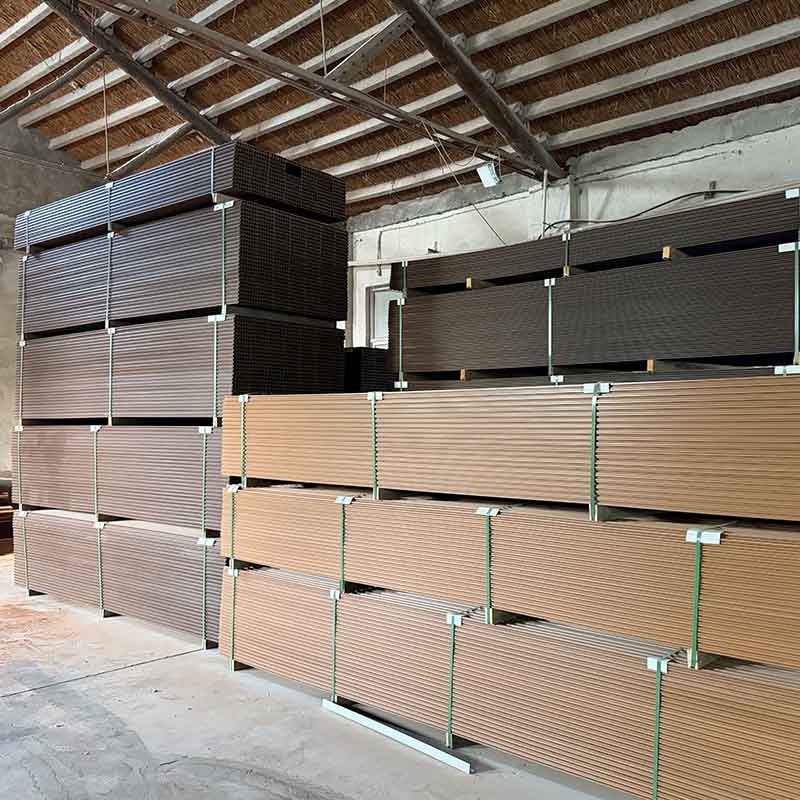
Supplier selection is particularly important when the decking will be used across large outdoor projects.
The first step is to confirm whether the supplier actually offers several profile options. A manufacturer with standard hollow decking, heavy-duty round-hole decking, solid decking and co-extrusion products can make recommendations based on project conditions rather than attempting to use one board for every application.
Technical communication also matters. Buyers should be able to obtain specifications, cross-sectional drawings, installation information, accessory recommendations and samples before confirming a bulk order.
Manufacturing flexibility becomes important for distributors and project contractors who may require customized lengths, colors, packaging or surface treatments.
Hengyuan‘s current WPC decking portfolio includes round-hole, hollow, solid, embossed, co-extrusion, UV-resistant and heavy-duty configurations, giving project teams several categories to compare within one product system.
For B2B procurement, this type of range can be more useful than simply identifying whichever board has the highest individual specification.
Conclusion
Heavy Duty WPC Decking is best understood as a category of composite decking engineered for more demanding outdoor applications rather than simply as a thicker version of a standard deck board.
Commercial terraces, resorts, public walkways, landscape projects and other high-traffic outdoor spaces may benefit from thicker hollow profiles, reinforced round-hole construction, solid composite decking or advanced co-extrusion systems depending on the project’s requirements.
The correct selection requires more than looking at board thickness.
Profile geometry, material formulation, surface system, support spacing, traffic level, weather exposure, installation method and technical documentation should all be evaluated together.
Hengyuan’s Heavy Duty WPC Decking uses a 140 × 25 mm seven-round-hole profile and sits within the broader WPC Round Hole Floor and WPC Decking ranges. For buyers comparing outdoor composite decking for higher-use environments, evaluating this profile alongside standard hollow, solid and co-extrusion decking provides a more reliable basis for project selection than relying on one specification alone.
FAQ
What is Heavy Duty WPC Decking?
Heavy Duty WPC Decking refers to composite decking designed for outdoor applications that require a more substantial profile or greater emphasis on structural and long-term performance. It may use thicker hollow sections, reinforced internal ribs, round-hole profiles or solid construction depending on the manufacturer and project.
Is Heavy Duty WPC Decking suitable for commercial walkways?
It can be suitable for commercial walkways when the selected product, substructure, joist spacing and installation system meet the project’s traffic and technical requirements. Commercial applications should be evaluated using product-specific information rather than assuming every heavy-duty board has the same performance.
Is solid WPC decking better than heavy-duty hollow decking?
Not necessarily. Solid decking contains more material and may be appropriate for particularly demanding applications, while a reinforced hollow profile can provide an effective balance between structural design, board weight and installation efficiency. The best option depends on load, support spacing, traffic and project conditions.
What thickness is considered heavy-duty WPC decking?
There is no universal thickness that automatically defines a heavy-duty WPC decking board. Profile geometry, wall thickness, internal ribs, material formulation and support spacing also influence performance. Hengyuan’s current Heavy Duty WPC Decking, for example, uses a 140 × 25 mm seven-round-hole profile.
Can Heavy Duty WPC Decking be used around pools?
It may be used for suitable poolside projects, but the specification should consider surface characteristics, drainage, moisture exposure, barefoot traffic, fastening and local safety requirements. Buyers should compare the complete decking system rather than selecting a board based only on thickness.
What is the difference between Heavy Duty WPC Decking and outdoor composite decking?
Outdoor composite decking is a broad category covering many residential and commercial products. Heavy-duty WPC decking is generally positioned toward more demanding or high-traffic applications. Standard outdoor boards may emphasize versatility and lighter handling, while heavy-duty profiles may use greater thickness or more substantial cross-sectional designs.
What should I check before buying commercial WPC decking?
Check board dimensions, cross-section, weight per meter, surface structure, recommended joist spacing, fastening system, available lengths, outdoor exposure requirements, relevant testing and installation documentation. For larger projects, samples and profile drawings should also be reviewed before bulk ordering.