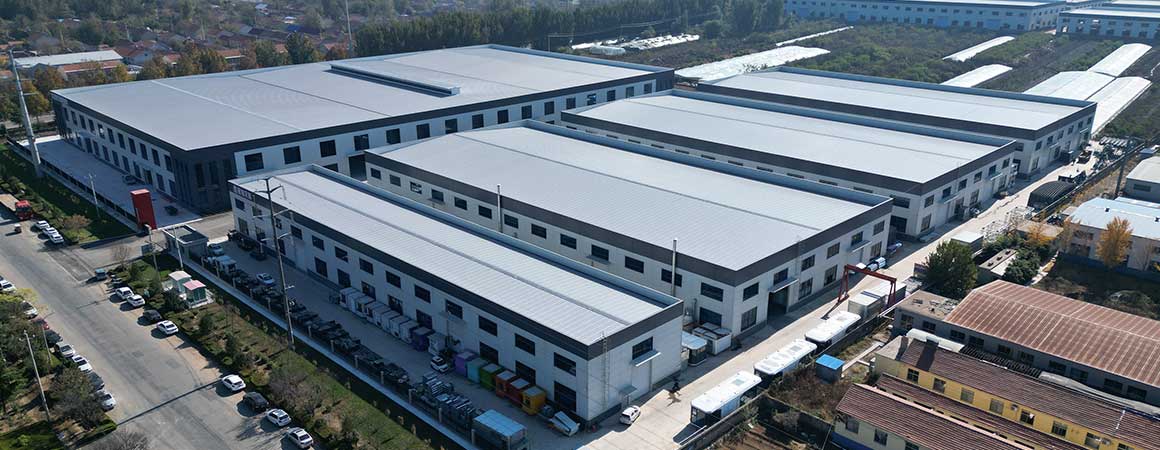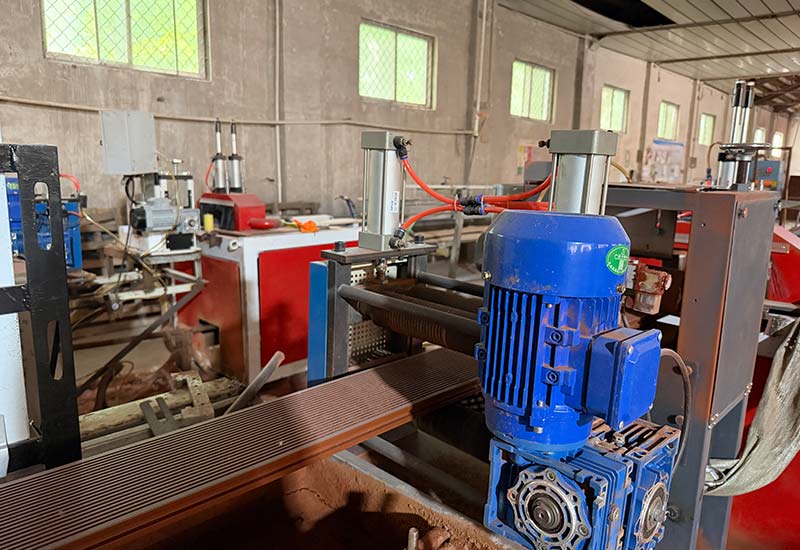
Hengyuan is a trusted WPC manufacturer focused on quality, innovation, and long-term outdoor performance. With advanced co-extrusion technology, our products offer strong waterproof, UV-resistant, and anti-corrosion durability for global applications.
Follow our latest updates and factory videos here:
👉 https://www.youtube.com/@HYWPC
Thank you for reading our blog.
Table of Contents
Introduction
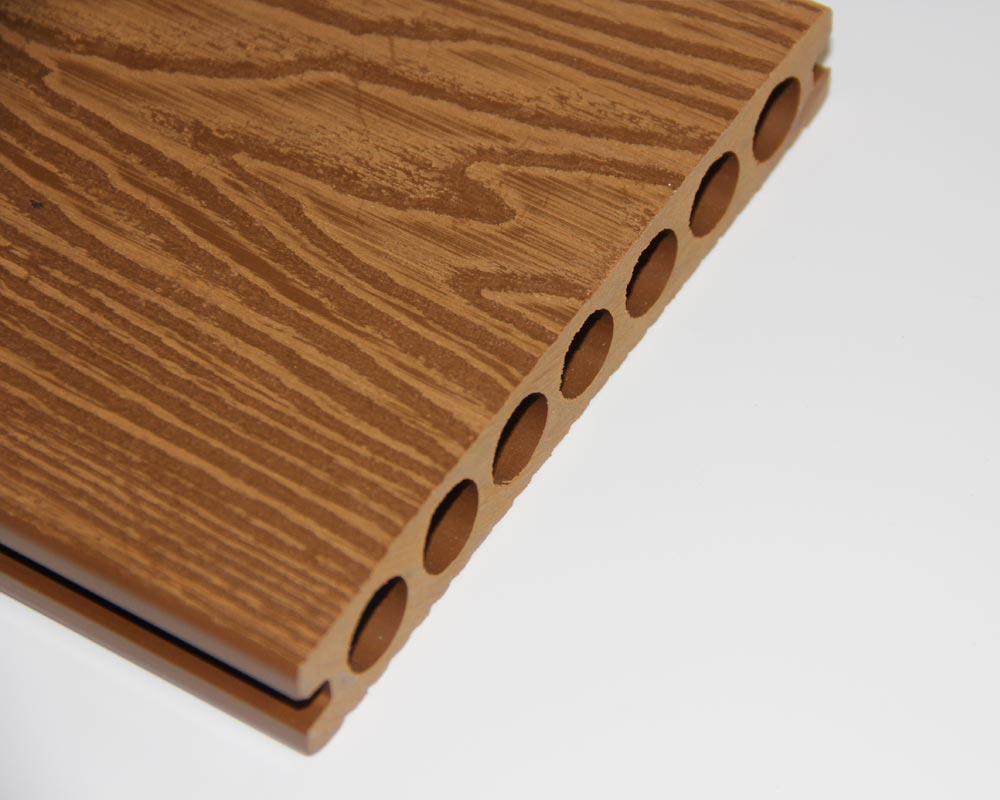
Hollow WPC decking can simplify outdoor construction because its engineered cavity structure reduces board weight while maintaining the profile needed for terraces, balconies, garden paths, patios, and similar pedestrian areas.
But choosing a suitable board is only half of the project.
Many decking problems begin underneath the finished surface. Incorrect joist spacing, blocked drainage, inadequate expansion gaps, unsuitable fasteners, poor end support, and rushed site preparation can affect an otherwise well-manufactured decking system.
This matters particularly with WPC Round Hole Floor, because hollow boards should be installed as part of a complete system rather than treated like ordinary timber planks.
This guide explains seven installation mistakes worth avoiding and shows how contractors and project teams can plan a more reliable outdoor WPC decking system.
Key takeaways:
- Joist spacing must match the specific decking profile.
- Hollow board ends need appropriate structural support.
- Expansion gaps should account for project conditions.
- Drainage and ventilation are part of deck design.
- Clips and fasteners should match the decking system.
- Boards should be stored and planned before installation.
- Installation requirements should be confirmed before materials reach the site.
Why Hollow WPC Decking Installation Requires Careful Planning
A hollow composite board contains longitudinal cavities rather than a fully solid cross-section.
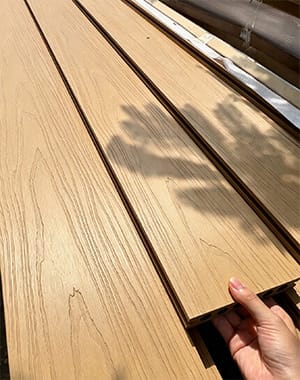
For example, Hengyuan’s Hollow WPC Decking uses a seven-round-hole profile measuring 148 × 23 mm and is intended for applications including garden pathways, balconies and terraces.
Hengyuan also offers Outdoor Composite Decking with a 138 × 22 mm seven-round-hole co-extrusion profile.
Although both belong to the broader round-hole decking family, differences in profile dimensions, wall geometry and surface construction mean installation requirements should be confirmed for the exact product being used.
This is why a contractor should never assume that instructions for one composite board automatically apply to another.
ASTM International’s ASTM D7032 recognizes that wood-plastic composite deck boards may have different shapes, thicknesses and formulations. Project performance therefore depends on the evaluated product and system rather than a generic idea of what all WPC boards can support.
Mistake 1: Using the Wrong Joist Spacing
One of the most important mistakes to avoid is installing joists according to habit rather than the requirements of the selected WPC decking board.
Why Joist Spacing Matters
Decking boards transfer pedestrian loads and other forces to the supporting structure below.
When support points are too far apart, a board may experience more deflection than intended. Hollow profiles are particularly dependent on a correctly designed support system because their structural behavior comes from the outer walls and internal ribs surrounding the cavities.
The International Residential Code also treats plastic composite decking support spacing as a material-specific issue rather than assuming all decking can use the same joist arrangement.
Do Not Copy Spacing From Another Product
A common site shortcut is to install the substructure first and select the decking later.
That reverses the preferred process.
Before finalizing joist spacing, confirm:
- Decking profile
- Board dimensions
- Board orientation
- Residential or commercial application
- Expected pedestrian traffic
- Diagonal or straight installation
- Manufacturer recommendations
- Local structural requirements
Diagonal installation may also change support requirements because boards cross joists differently than in a conventional perpendicular layout.
Better Practice
Select the decking profile before completing the supporting frame.
If the project is still comparing different profiles, review the complete WPC Decking range and request the installation requirements for each shortlisted product.
Mistake 2: Ignoring Expansion and Contraction
WPC decking combines wood-based material with thermoplastic polymers.
Like many construction materials used outdoors, composite decking responds to temperature and environmental changes.
A deck installed during cool conditions may experience different dimensional conditions during intense summer exposure.
Why Fixed Boards Need Space to Move
If boards are installed with unsuitable end or side clearances, dimensional movement can create pressure between adjacent boards, walls or other fixed structures.
Potential symptoms may include:
- Tight board joints
- Uneven edges
- Localized lifting
- Fastener stress
- Distortion around fixed boundaries
The solution is not simply to apply one universal gap measurement to every project.
Gap Requirements Depend on Several Variables
Installers should consider:
- Board length
- Installation temperature
- Local climate
- Surface exposure
- Decking profile
- Board direction
- Fastening system
- Distance between fixed structures
A long board installed between two rigid walls needs different planning from a shorter board with an open end.
Better Practice
Request the manufacturer’s expansion-gap instructions before installation.
The contractor should also consider the expected temperature range at the installation location rather than treating expansion as an abstract laboratory issue.
Mistake 3: Designing the Deck Without Proper Drainage
WPC decking is commonly selected for outdoor environments, but that does not mean standing water should be treated as normal deck design.
Water management begins below the decking surface.
Research from the USDA Forest Service notes that outdoor wood-plastic composites are exposed to moisture, weathering and biological conditions during service.
Good deck design should therefore encourage water to leave the system rather than remain trapped beneath it.
Where Drainage Problems Usually Begin
Poor drainage can result from:
- Flat substrates with no water path
- Joists blocking natural runoff
- Leaves collecting beneath boards
- Closed perimeter details
- Decking installed directly against drainage outlets
- Insufficient clearance beneath the deck
- Landscaping built too high around the perimeter
Hollow Boards Do Not Replace Deck Drainage
The internal cavities in round-hole decking are part of the board profile. They should not be interpreted as the primary drainage system for the entire deck.
Rainwater management should be considered across the whole assembly:
decking surface, board gaps, joists, foundation, substrate and surrounding landscape.
Better Practice
Before installing the first board, verify where rainwater will travel after passing through or around the decking surface.
If the answer is unclear, the drainage design needs more work.
Mistake 4: Leaving Hollow Board Ends Poorly Supported

The edge and end details of hollow WPC decking deserve special attention.
Cutting through a hollow board exposes its internal cavities. This is normal, but unsupported or poorly detailed board ends can create both structural and visual problems.
Why End Position Matters
A board end should normally finish in a location where the fastening and supporting system can function correctly.
Long unsupported ends can increase movement under foot traffic.
This becomes particularly important around:
- Stairs
- Deck edges
- Access openings
- Columns
- Curved layouts
- Diagonal cuts
- Planters
- Swimming pool borders
Plan Cut Locations Before Installation
Contractors sometimes begin laying full boards from one side and deal with the final cuts only when they reach the opposite edge.
This can create narrow pieces, awkward joints or poorly supported ends.
A better approach is to calculate board coverage and likely cut positions before installation begins.
Consider the Finished Edge
Depending on the selected WPC decking system, exposed ends may use fascia boards, edge boards, end caps or another manufacturer-approved finishing method.
The finishing detail should be selected before material quantities are finalized.
Mistake 5: Using Incompatible Clips or Fasteners
Hidden clips are popular in WPC decking because they can produce a clean surface without visible screw heads across the main board area.
However, a clip is not merely cosmetic.
It can influence board positioning, spacing and movement.
Why Generic Hardware Can Cause Problems
Different WPC decking boards may have different side grooves and fastening geometries.
An unsuitable clip can:
- Fit too loosely
- Prevent correct board positioning
- Create inconsistent spacing
- Damage the side groove
- Restrict intended movement
- Provide inadequate fastening
Fastener material is also important in outdoor environments where moisture and corrosion exposure must be considered.
Treat Accessories as Part of the Decking System
When requesting WPC Decking, the accessory list should be discussed at the same time as the board specification.
Ask the supplier to identify:
- Standard clips
- Starter clips
- Screws
- Joist options
- End treatments
- Fascia
- Corner details
- Recommended fastener spacing
This reduces the risk of discovering missing or incompatible components after materials arrive on site.
Mistake 6: Installing Boards Without Proper Site Storage
WPC decking should arrive on site before installation in a condition that allows it to remain straight, clean and protected from avoidable damage.
Improper storage can complicate an otherwise straightforward installation.
Common Storage Errors
Problems can occur when boards are:
- Stored on uneven ground
- Supported at only a few points
- Left partially hanging from a pallet
- Mixed randomly between different lengths
- Exposed to construction debris
- Dragged across abrasive surfaces
- Placed where heavy equipment can damage them
Keep Boards Properly Supported
Long decking profiles should be supported appropriately during storage.
The objective is to prevent unnecessary deformation before the boards are fixed into the deck system.
Organize Boards by the Installation Plan
Where several board lengths or colors are involved, organize materials before laying begins.
For Hengyuan’s 148 × 23 mm Hollow WPC Decking, standard listed lengths include 2.9 m, 3 m and 4 m, with customized lengths also available.
Planning length combinations before cutting can reduce unnecessary joints and make the deck layout more consistent.
Mistake 7: Choosing the Board Only After the Substructure Is Finished
This may be the most expensive planning mistake because it can force the decking system to adapt to a structure that was never designed for it.
WPC decking should be selected early enough for the substructure, drainage and finishing details to reflect the actual product.
Round-Hole Boards Are Not All Identical
The current WPC Round Hole Floor range includes several product types rather than one universal hollow board.
For example:
- Hollow WPC Decking
- Heavy Duty WPC Decking
- Outdoor Composite Decking
- UV Resistant WPC Decking
- 3D Embossed WPC Decking
- ASA Co Extrusion Decking
- Wide WPC Decking
These profiles can address different combinations of dimensions, surface systems, exposure conditions and project requirements.
The board specification should therefore influence the deck design rather than simply being inserted into a predetermined structure.
Hollow WPC Decking Installation Checklist
A short pre-installation review can prevent many site problems.
| Item to Confirm | What to Check | Why It Matters |
|---|---|---|
| Board profile | Round hole, square hole or solid | Determines system requirements |
| Board size | Width and thickness | Affects layout and coverage |
| Board length | Standard or customized | Influences joints and cutting |
| Joist spacing | Manufacturer recommendation | Controls board support |
| Board direction | Straight or diagonal | May affect support requirements |
| Expansion gaps | Ends, sides and fixed objects | Allows dimensional movement |
| Drainage | Water escape path | Reduces trapped moisture |
| Ventilation | Space beneath decking | Supports outdoor deck performance |
| Clips | Correct groove compatibility | Maintains board positioning |
| Fasteners | Suitable outdoor specification | Supports long-term fixing |
| Edge detail | Fascia, trim or end treatment | Completes deck perimeter |
| Storage | Flat, supported and organized | Protects boards before installation |
| Local requirements | Building or project rules | Supports compliance |
How to Plan a Round-Hole WPC Decking Layout
Installation becomes easier when the board layout is treated as a design task rather than an on-site improvisation.
Step 1: Measure the Complete Area
Record overall dimensions as well as obstacles such as:
- Columns
- Steps
- Walls
- Drainage outlets
- Doors
- Pool edges
- Inspection covers
- Landscape features
Irregular shapes should be divided into simpler sections for planning.
Step 2: Choose the Board Direction
Board direction affects appearance, drainage perception, cut locations and supporting-frame arrangement.
Long visual lines can make a small terrace appear more spacious, while another direction may reduce waste or improve alignment with the building.
Step 3: Review Available Board Lengths
If the selected Hollow WPC Decking is available in 2.9 m, 3 m and 4 m lengths, compare those dimensions with the deck layout before deciding where joints should occur.
Custom lengths may also be worth discussing for larger repeat projects.
Step 4: Position Joints Intentionally
Avoid allowing board-end joints to occur randomly.
A controlled joint pattern normally creates a more professional appearance and makes it easier to ensure that every board end receives appropriate support.
Step 5: Calculate Accessories
Decking quantity alone does not complete a deck.
The material schedule should also consider joists, clips, screws, starter pieces, finishing profiles and wastage from cuts.
Hollow WPC Decking vs Solid Decking During Installation
The correct profile depends on the project, but installation teams should understand how hollow and solid structures can affect site handling.
| Installation Factor | Hollow WPC Decking | Solid WPC Decking |
| Board weight | Generally lighter | Generally heavier |
| Manual handling | Usually easier | May require more handling effort |
| Cutting | Cavities become visible at cut ends | Solid cross-section remains visible |
| End finishing | Often requires careful hollow-end detailing | Different edge treatment options |
| Substructure | Must follow profile requirements | Must also follow product requirements |
| Typical selection | Terraces, balconies, paths, general outdoor use | Often considered for demanding applications |
| Logistics | Lower profile weight can simplify handling | Higher material mass affects handling |
| Selection basis | Application + profile engineering | Application + profile engineering |
Neither structure should be described as universally superior.
The correct decision comes from matching board construction, expected loads, substructure and project conditions.
Choosing Hollow WPC Decking for Different Outdoor Areas

Balcony
A relatively lightweight hollow profile can be practical where materials must be transported through restricted building access.
The Hollow WPC Decking 148 × 23 mm profile is one option intended for balconies and smaller terraces.
Structural capacity of the existing balcony and local construction requirements should still be checked separately.
Garden Path
Garden paths frequently involve multiple cuts, curves and landscape boundaries.
A manageable hollow profile can simplify handling, particularly where large construction equipment has limited access.
Residential Patio
Patios generally prioritize appearance, comfortable pedestrian use and straightforward maintenance.
Round-hole WPC decking provides several surface and profile options that can be matched to the architectural style and expected use.
Poolside Deck
Poolside installations require more than choosing a water-resistant material.
Drainage, surface texture, fastening, barefoot comfort, exposure and local safety requirements should all be considered.
Commercial Walkway
Commercial applications typically require a more detailed evaluation of pedestrian traffic and loading.
Projects can compare products such as Outdoor Composite Decking with heavier-duty profiles based on the project’s technical requirements.
Why Installation Documentation Should Be Part of Supplier Evaluation
Professional WPC sourcing should include more than receiving samples and confirming board colors.
Before an order is finalized, buyers should ask whether the supplier can provide enough information for the installation team to prepare correctly.
Useful documents may include:
- Product specification sheet
- Cross-sectional drawing
- Installation guide
- Joist-spacing recommendation
- Expansion-gap guidance
- Accessory list
- Clip drawings
- Packaging information
- Maintenance guidance
- Relevant technical test documents
ASTM D7032 provides a formal framework for establishing performance ratings for wood-plastic composite and plastic lumber used as exterior decking products. This reinforces why engineering and installation decisions should rely on documented product information rather than generic assumptions.
Conclusion
A good hollow WPC decking installation begins long before the first board is fixed.
The most common problems are often not caused by the visible decking surface itself. They begin with unsuitable joist spacing, poor drainage, inadequate movement allowances, unsupported ends, incompatible fasteners or an installation plan created without reference to the selected board.
Round-hole WPC decking can be a practical solution for balconies, terraces, patios, garden pathways and many other outdoor environments, especially when manageable board weight and installation flexibility are important.
The key is to treat the decking as a complete system.
Before installation, confirm the board profile, dimensions, joist requirements, drainage conditions, expansion details, fastening system and finishing method. Hengyuan’s WPC Round Hole Floor range provides multiple round-hole profiles that can be evaluated according to project conditions rather than relying on a single board design for every application.
FAQ
What is the biggest mistake when installing hollow WPC decking?
Using an unsuitable supporting structure is one of the most important mistakes to avoid. Joist spacing, board direction, fastening and support at board ends should match the selected profile. Contractors should obtain installation requirements for the exact WPC board instead of copying dimensions from another product.
Does hollow WPC decking need an expansion gap?
Yes. Outdoor composite decking experiences dimensional movement as environmental conditions change. Appropriate gaps should be considered at board ends, sides and fixed structures. The correct dimensions depend on the product, board length, installation temperature and manufacturer guidance rather than one universal value.
Can hollow WPC decking be installed directly on concrete?
Decking should normally be designed as a system that provides suitable support, fixing, drainage and ventilation rather than simply placing hollow boards directly onto an untreated concrete surface. The exact construction method depends on the substrate and selected product, so the supplier’s installation details should be reviewed first.
How do I choose joist spacing for round-hole WPC decking?
Start with the manufacturer’s recommendation for the exact board profile and intended application. Board dimensions, cavity design, expected traffic and installation direction can all influence the support arrangement. Local structural or building requirements should also be checked where applicable.
Is hollow WPC decking suitable for balconies and patios?
It can be well suited to many balconies, patios, terraces and garden areas because its hollow structure can reduce board weight and simplify handling. Final selection should still consider structural capacity, drainage, exposure, traffic, fastening requirements and the installation specifications of the chosen profile.