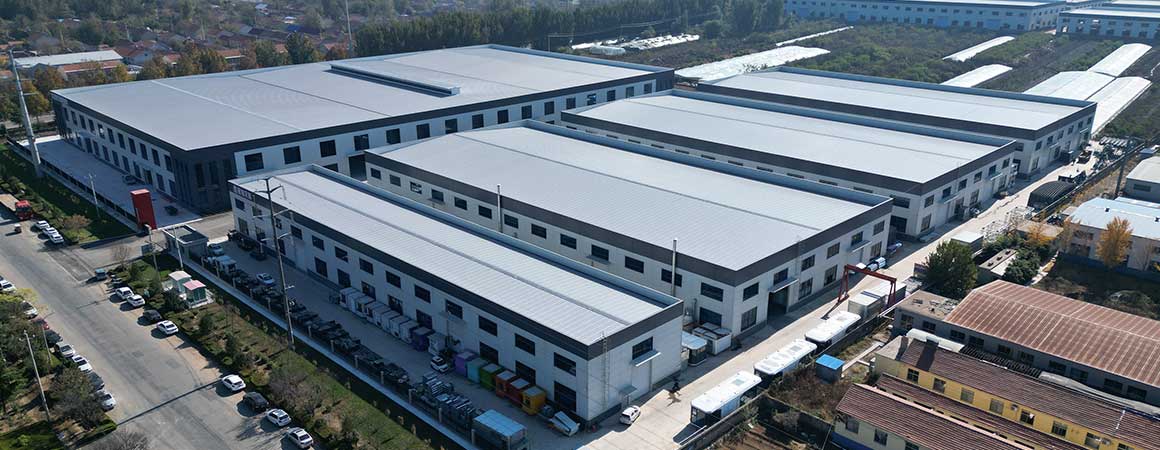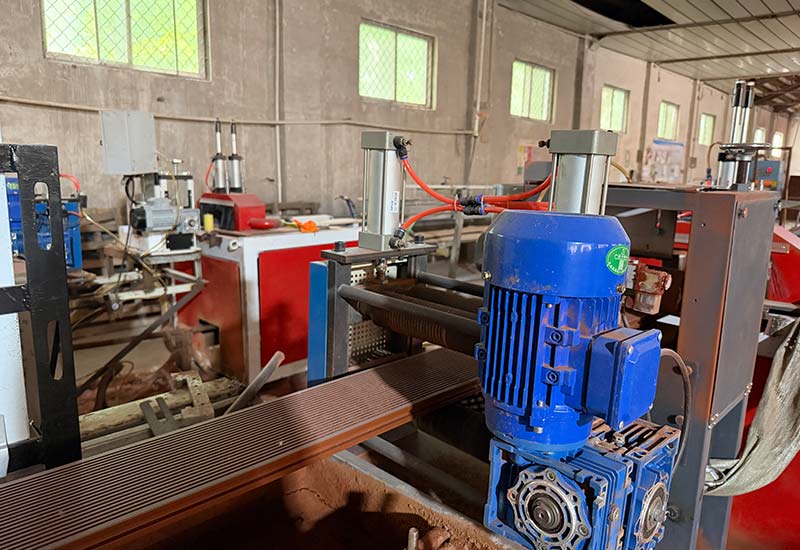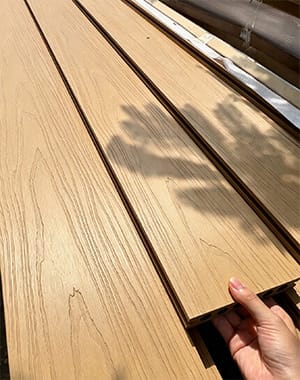
Hengyuan is a trusted WPC manufacturer focused on quality, innovation, and long-term outdoor performance. With advanced co-extrusion technology, our products offer strong waterproof, UV-resistant, and anti-corrosion durability for global applications.
Follow our latest updates and factory videos here:
👉 https://www.youtube.com/@HYWPC
Thank you for reading our blog.
Table of Contents
Introduction
Outdoor construction materials are undergoing a major transformation driven by sustainability requirements, lifecycle cost optimization, and performance engineering. Traditional timber decking, while aesthetically appealing, often fails under long-term exposure to moisture, UV radiation, and biological degradation.
In contrast, WPC Decking (Wood Plastic Composite Decking) has emerged as a next-generation solution widely adopted across residential, commercial, and infrastructure projects. According to global building materials industry reports (including composite materials market analyses published by Grand View Research and Fortune Business Insights), the WPC market is projected to grow at a compound annual growth rate (CAGR) of over 10% through 2030, driven largely by outdoor construction demand.
Key industry observations include:
- Over 70% of outdoor renovation projects in urban residential developments now consider composite decking alternatives
- Maintenance cost reduction using WPC materials can reach 40%–60% over a 10-year lifecycle
- UV-stabilized co-extrusion technology significantly improves color retention by up to 80% compared to traditional WPC surfaces
- Demand for low-maintenance outdoor living spaces continues to rise globally in hospitality and real estate sectors
This guide expands beyond basic product introduction and provides a deep engineering-level breakdown of material science, structural classification, performance standards, and real-world engineering applications of WPC Decking systems.
Engineering Fundamentals of WPC Decking Systems
What Defines a WPC Decking Structural System?
A modern WPC Decking system is not simply a flooring board—it is a composite engineered material system designed for controlled mechanical behavior under outdoor environmental stress.
It integrates three primary material domains:
- Natural wood fibers for structural reinforcement and aesthetic texture
- Thermoplastic polymers (HDPE, PVC, or PP) for waterproofing and binding
- Functional additives for UV resistance, anti-fungal protection, and color stabilization
Material Ratio Engineering in WPC Decking
Standard Industrial Composition Range
Most high-quality WPC Decking products follow this structure:
- Wood fiber: 50%–65%
- Polymer matrix: 25%–40%
- Additives: 5%–10%
Engineering Impact of Composition
- Higher wood fiber → more natural texture, but higher moisture sensitivity
- Higher polymer content → improved waterproofing and durability
- Additives → directly influence UV resistance and color stability
Physical Performance Parameters (Industry Benchmark Data)
Typical performance values for premium WPC Decking systems:
- Flexural strength: 25–45 MPa
- Water absorption rate: <1.5% after 24h immersion
- Density range: 1.2–1.4 g/cm³
- Thermal expansion coefficient: 30–60 ×10⁻⁶ /°C
- Service temperature range: -40°C to +60°C
These values vary depending on structure type (hollow, solid, or co-extruded systems).
Advanced Classification of WPC Decking Systems
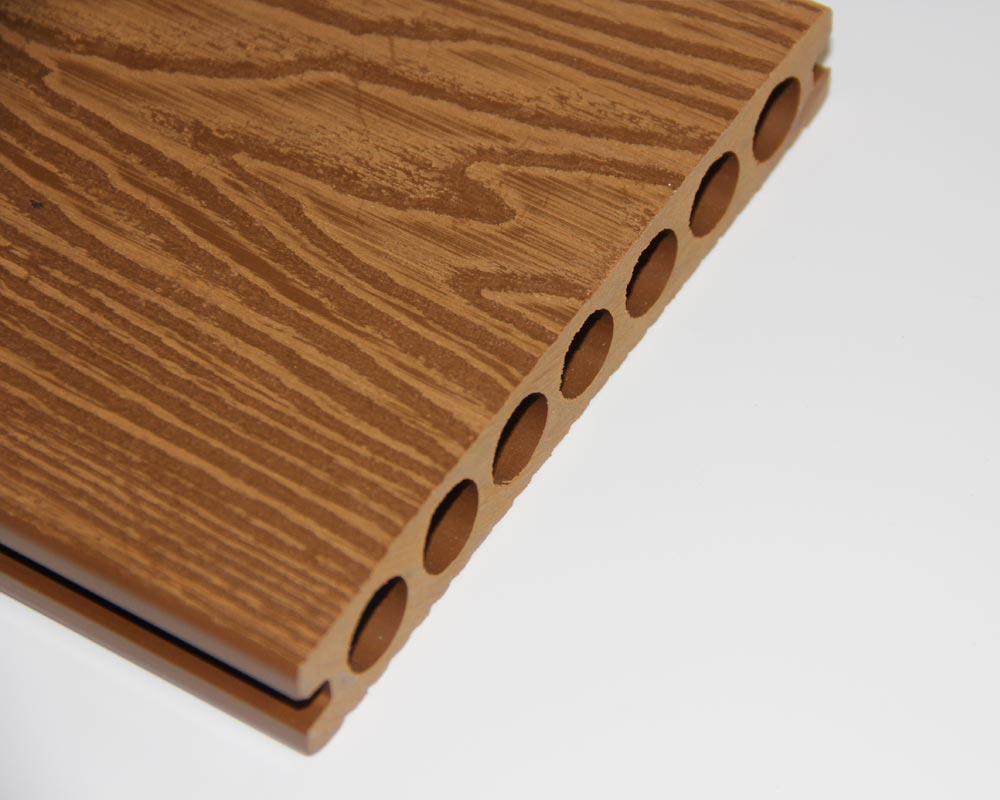
Hollow Round Hole WPC Decking System
Structural Engineering Concept
Hollow WPC Decking uses internal cavity structures (round holes or square voids) to reduce material usage while maintaining surface rigidity.
Mechanical Behavior
- Reduced weight improves installation efficiency
- Internal voids assist thermal expansion absorption
- Drainage performance is enhanced through hollow channels
Limitations
- Lower impact resistance compared to solid systems
- Not recommended for heavy-load commercial areas
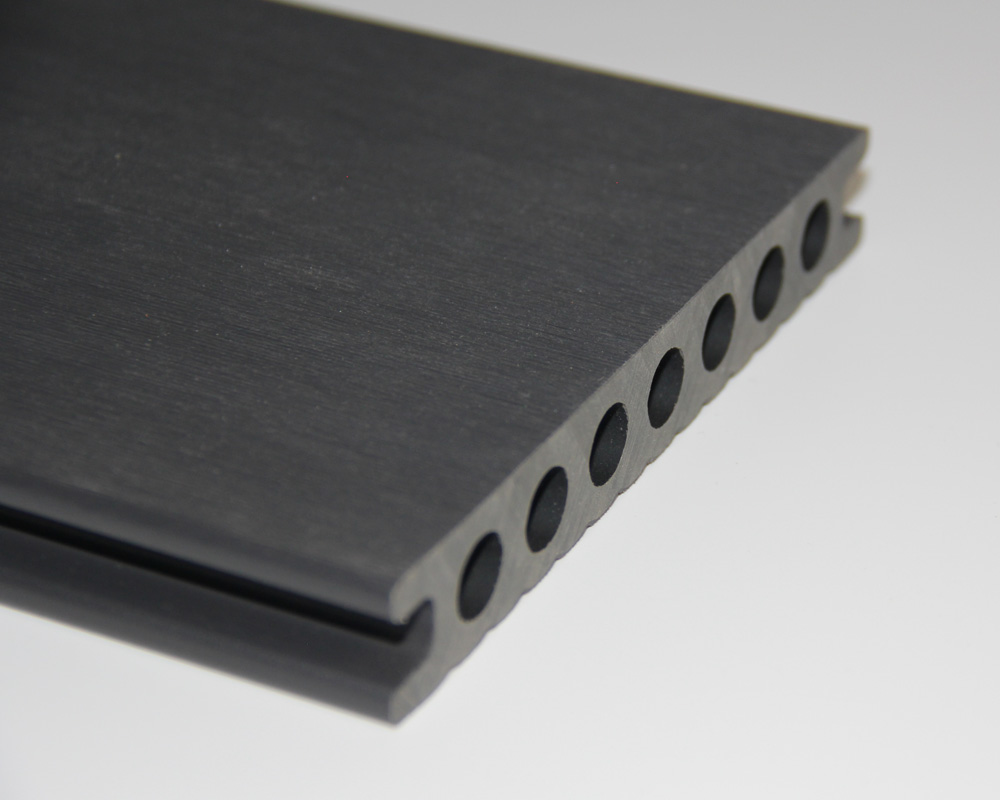
Solid ASA Co-Extrusion WPC Decking
Structural Engineering Definition
Solid WPC Decking integrates a full-density core with an ASA protective co-extrusion outer layer.
Functional Advantages
- High compressive strength
- Superior deformation resistance
- Enhanced UV and chemical resistance
ASA Surface Technology Insight
ASA (Acrylonitrile Styrene Acrylate) provides:
- UV aging resistance up to 10+ years
- High surface hardness
- Improved color stability under direct sunlight exposure
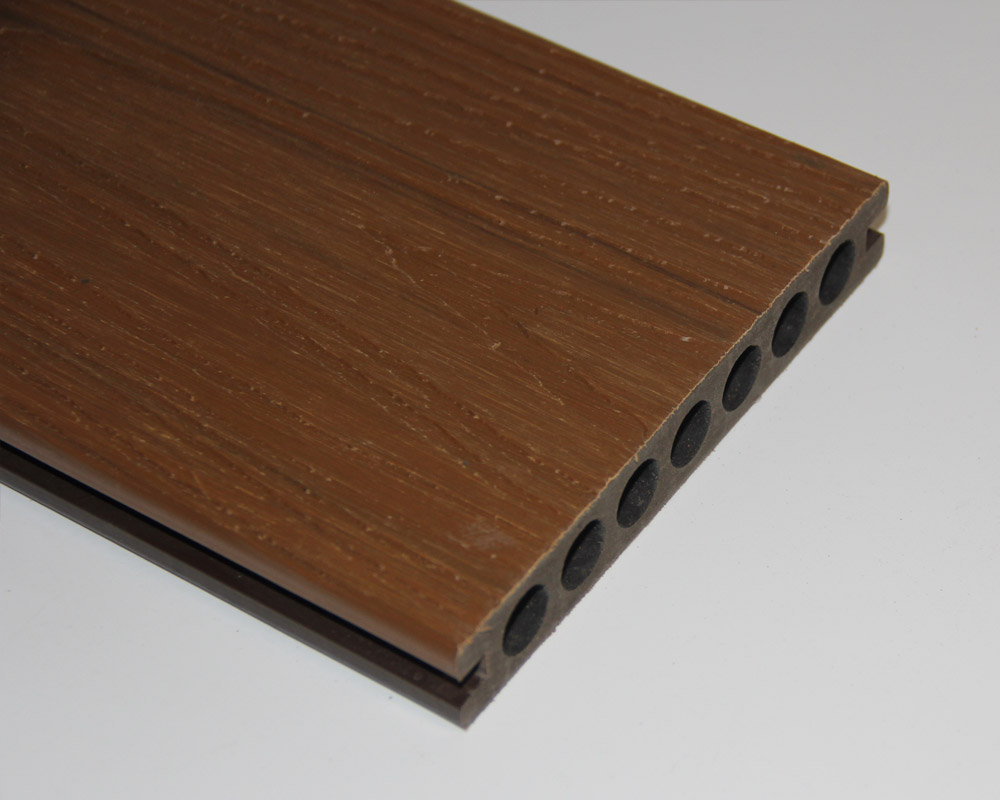
3D Embossed WPC Decking System
Surface Engineering Mechanism
3D embossing uses high-pressure rollers and thermal imprinting to create deep wood grain textures.
Functional Benefits
- Surface friction coefficient increased by 20%–35%
- Improved anti-slip safety in wet environments
- Enhanced visual realism for architectural applications
Concept Insight
This system bridges aesthetic natural wood appearance with engineered composite durability, making it highly suitable for premium landscape projects.
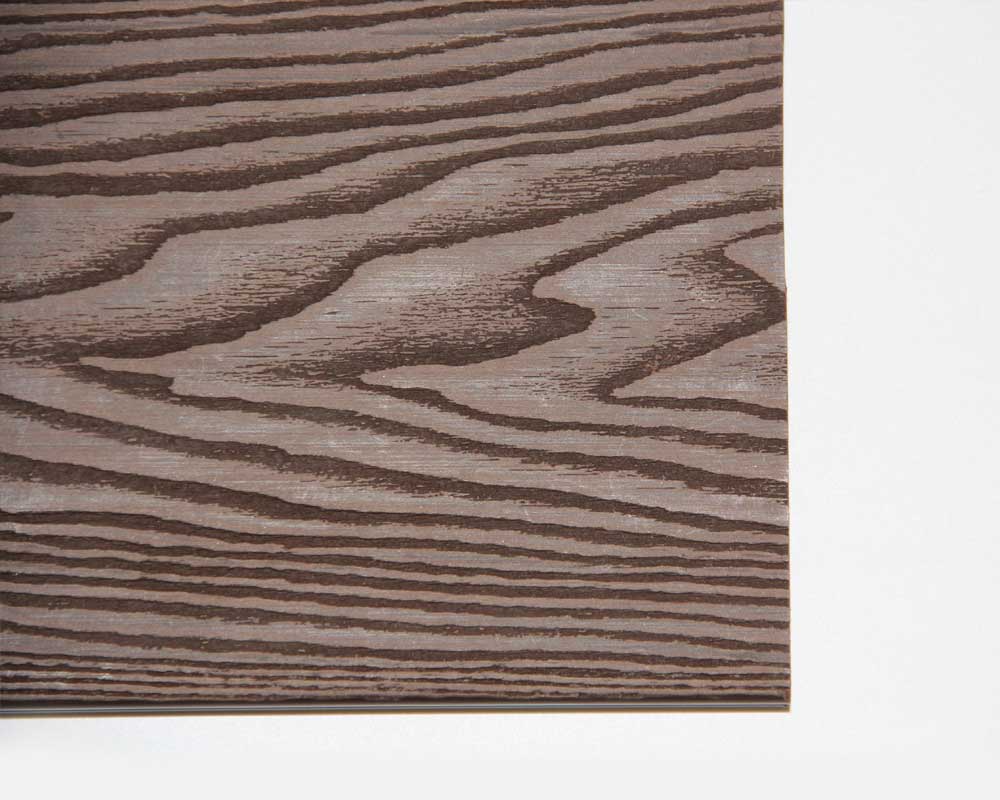
Heavy Duty Structural WPC Decking
Engineering Design Principle
Heavy-duty systems increase cross-sectional thickness and structural reinforcement density.
Load Performance Characteristics
- Designed for high pedestrian traffic (>5000 cycles/day in commercial areas)
- Increased bending resistance by up to 40% compared to standard hollow types
- Reduced deformation under long-term static loads
WPC Decking vs Traditional Materials: Deep Engineering Comparison
Material Performance Benchmark Table
| Property | WPC Decking | Natural Wood | PVC Decking | Stone Tiles |
|---|---|---|---|---|
| Maintenance Cost | Low | High | Medium | Low |
| Water Resistance | High | Low | High | High |
| UV Stability | High (co-extrusion) | Low | Medium | High |
| Installation Complexity | Medium | Medium | Low | High |
| Lifespan | 15–25 years | 5–10 years | 10–15 years | 20+ years |
| Environmental Impact | Recycled materials | Deforestation risk | Petroleum-based | High energy production |
Engineering Interpretation of Material Differences
Moisture Resistance Mechanism
WPC materials resist moisture penetration through polymer encapsulation of wood fibers, preventing swelling and decay.
Thermal Expansion Behavior
Unlike natural wood, WPC exhibits predictable thermal expansion behavior, allowing engineered installation gaps.
Surface Technology and Co-Extrusion Engineering
Co-Extrusion Protection Layer System
Technical Structure
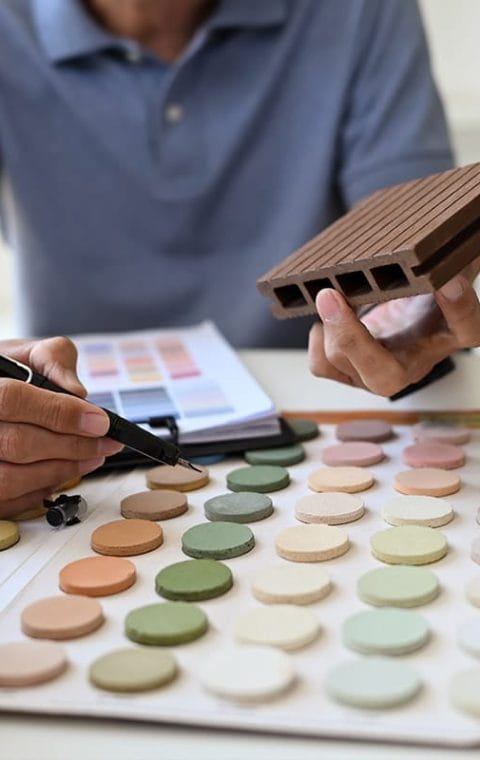
Co-extrusion involves applying a polymer protective shell over the core material during extrusion.
Functional Benefits
- Eliminates direct UV exposure to core material
- Reduces surface porosity
- Improves stain resistance
UV Resistance Performance Engineering
Industry testing standards (ASTM G154 accelerated UV aging tests) indicate:
- Standard WPC: noticeable fading within 1,000–1,500 hours
- Co-extruded WPC: stable color retention beyond 3,000–5,000 hours
3D Embossed Surface Performance Metrics
- Slip resistance improvement: +25% average
- Surface wear resistance: +30% in abrasion testing
- Visual realism index: significantly higher perception score in architectural surveys
Color Engineering and Architectural Integration
Standard Color Palette
- Light Grey
- Silver Grey
- Maple
- Ancient Wood
- Teak
- Red Sandalwood
Architectural Design Concept
Neutral Tone Strategy
Grey-based tones are widely used in modern minimalist architecture due to:
- Low visual aging rate
- High compatibility with concrete and steel structures
Warm Wood Tone Strategy
Wood tones like teak and maple are used to:
- Enhance natural landscape integration
- Improve hospitality environment aesthetics
Installation Engineering and Structural Design Standards
Substructure System Requirements
Joist Spacing Standards
- Residential decking: 300–350 mm spacing
- Commercial decking: 250–300 mm spacing
- Heavy-duty areas: ≤250 mm spacing
Expansion Gap Engineering
Standard Expansion Values
- Length direction: 5–8 mm
- Width direction: 3–5 mm
Purpose
Prevents deformation caused by thermal expansion and humidity variation.
Drainage System Design Principles
Proper installation requires:
- Minimum 2% slope gradient
- Open substructure ventilation
- Water flow channels beneath decking
Real-World Case Studies (Engineering Applications)
Case Study 1: European Residential Development Project
A large-scale housing development replaced natural wood decking with co-extruded WPC systems.
Results after 24 months:
- Maintenance cost reduced by 52%
- Surface deformation rate reduced by 80%
- Resident satisfaction increased significantly
Case Study 2: Southeast Asia Resort Construction
High-humidity environment required durable outdoor flooring.
Outcome:
- No fungal or mold issues after 3 years
- Color stability maintained above 90% visual retention
- Reduced maintenance workforce demand by 40%
Case Study 3: Urban Public Walkway Project
Heavy-duty WPC Decking used in high pedestrian traffic zone.
Performance results:
- No structural failure after 2 million pedestrian cycles
- Surface wear remained within acceptable tolerance range
- Improved safety due to anti-slip embossing
Industry Standards and Compliance Framework
ASTM Standards
- ASTM D7032: WPC performance classification
- ASTM G154: UV resistance testing
- ASTM D6109: Flexural performance
EN Standards (Europe)
- EN 15534: Composite material performance requirements
- EN 13501: Fire reaction classification
Environmental Certification Trends
- FSC-certified wood fiber usage
- Recycled polymer content verification
- Low VOC emission compliance
Market Trends and Industry Insights (2026 Outlook)
Growth Drivers
- Urban outdoor living expansion
- Hospitality industry renovation demand
- Sustainable construction regulations
Technology Trends
- Nano-coating surface enhancements
- AI-based production quality control
- Hybrid composite reinforcement systems
Conclusion
WPC Decking represents a mature evolution of outdoor flooring technology, combining material science, surface engineering, and sustainable design principles. Its adaptability across residential, commercial, and infrastructure projects makes it one of the most widely adopted composite materials in modern construction.
From hollow lightweight systems to heavy-duty structural decking and advanced co-extrusion technologies, WPC Decking provides scalable solutions for diverse environmental and engineering requirements, ensuring long-term performance, aesthetic stability, and cost efficiency.
FAQ
What is WPC Decking made from?
It is made from wood fiber, plastic polymers, and performance additives designed for outdoor durability.
How long does WPC Decking last outdoors?
High-quality systems typically last 15–25 years depending on installation and environmental conditions.
Does WPC Decking fade over time?
Co-extruded systems significantly reduce fading, maintaining color stability for many years.
Is WPC Decking suitable for commercial use?
Yes, especially heavy-duty and solid ASA systems designed for high traffic environments.
Can WPC Decking be installed near pools?
Yes, 3D embossed and co-extruded types are widely used due to anti-slip and water resistance properties.