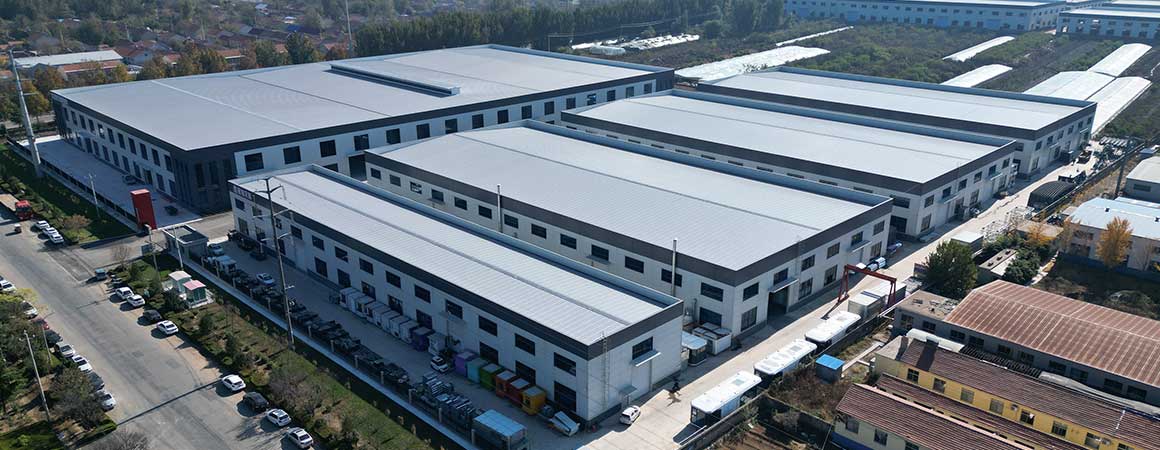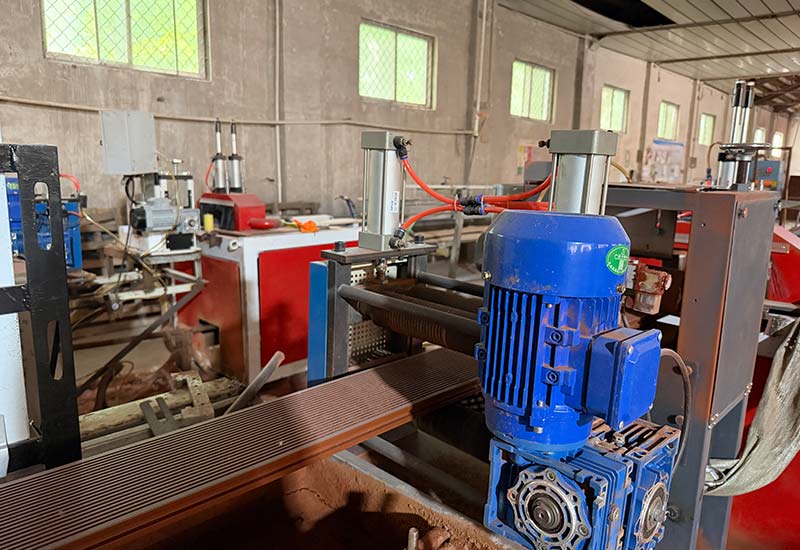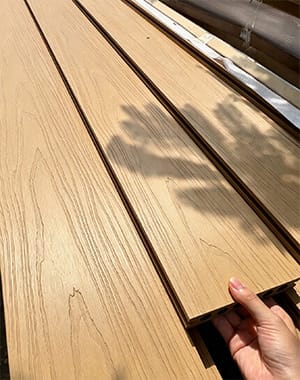
Hengyuan is a trusted WPC manufacturer focused on quality, innovation, and long-term outdoor performance. With advanced co-extrusion technology, our products offer strong waterproof, UV-resistant, and anti-corrosion durability for global applications.
Follow our latest updates and factory videos here:
👉 https://www.youtube.com/@HYWPC
Thank you for reading our blog.
Table of Contents
Before selecting a supplier, focus on these essential checks:
- Confirm whether the supplier is a real factory, trading company, or mixed operation.
- Match the product structure to your application, climate, traffic level, and installation method.
- Review raw-material control, extrusion processes, surface finishing, and batch traceability.
- Request technical data, current test reports, representative samples, and quality records.
- Compare quotations based on identical specifications rather than unit price alone.
- Verify production capacity, realistic lead times, packaging methods, and export support.
- Evaluate communication quality, technical knowledge, and complaint-handling procedures.
- Start with a controlled trial order before committing to long-term volume.
Choosing a WPC Manufacturer is not simply a matter of comparing product catalogs and prices. For importers, distributors, contractors, developers, and building-material brands, the supplier affects product consistency, installation efficiency, delivery reliability, warranty exposure, and customer satisfaction.
A professional website can help buyers create an initial shortlist, but the final purchasing decision should be based on verifiable evidence. The following WPC Manufacturer vetting tips provide a practical framework for evaluating suppliers before approving samples, deposits, and container orders.
Why WPC Manufacturer Vetting Matters
Wood-plastic composite products may look almost identical in photographs while performing very differently after installation. Raw-material preparation, formulation stability, extrusion temperature, cooling, embossing, co-extrusion layers, packaging, and storage can all influence the finished product.
A reliable WPC Manufacturer should be able to explain how these factors are controlled. A weak supplier may provide vague answers, change specifications between batches, or quote a low price without explaining what has been removed from the product or service package.
Procurement Risk
Procurement risk is the possibility that the delivered products do not match the approved sample, dimensions, quantity, color, surface, or shipment schedule.
Thorough supplier vetting reduces this risk before the purchase contract is signed and before a large deposit is transferred.
Product Performance Risk
Performance risk concerns how the product behaves after installation. Buyers should consider board structure, support spacing, surface design, climate exposure, fastening systems, drainage, and maintenance requirements.
Terms such as “waterproof,” “heavy duty,” or “premium quality” are not enough unless they are supported by measurable specifications.
Commercial Risk
Commercial risk includes unexpected mold charges, accessory costs, packaging upgrades, documentation fees, production delays, and unclear warranty responsibilities.
A qualified WPC Manufacturer should provide transparent commercial terms and clearly separate mandatory costs from optional services.
Define Your WPC Product Requirements First
A supplier cannot recommend the correct product if the inquiry only says, “Please send your best WPC price.”
Before contacting potential factories, prepare a requirement sheet that makes different quotations easier to compare.
Identify the Product Application
State whether the material will be used for:
- Residential decking
- Hotel or resort terraces
- Poolside walkways
- Exterior wall cladding
- Privacy fencing
- Commercial landscaping
- Garden paths
- Public recreation areas
Buyers sourcing outdoor flooring can begin by reviewing available WPC decking products. For façade or architectural projects, compare the available WPC cladding profiles.
Define the Profile and Structure
Specify the required width, thickness, length, surface pattern, edge design, internal structure, and installation system.
Small differences in wall thickness, internal reinforcement, board weight, or groove dimensions can affect cost, stiffness, packing quantity, installation, and container loading.
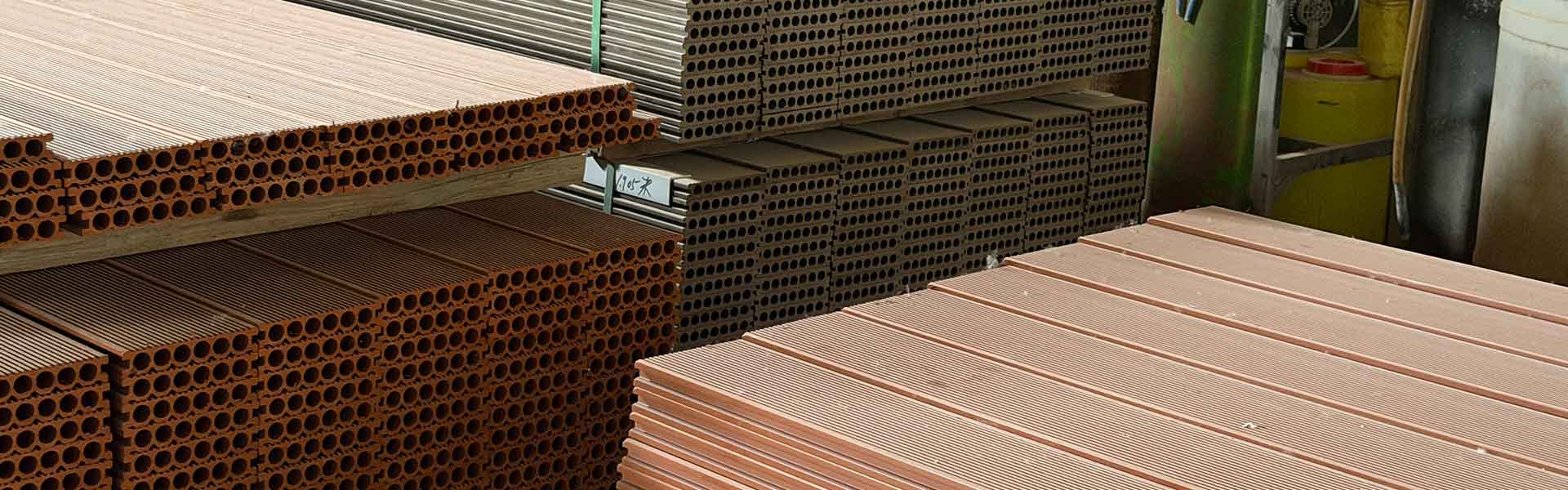
Hollow WPC Profiles
Hollow boards can provide an economical balance between material usage and project performance. They may be suitable for residential terraces, garden paths, balconies, and other applications when the internal structure and support spacing are correctly designed.
A hollow board should not automatically be considered lower quality. Buyers should review its wall thickness, internal ribs, unit weight, span requirements, and intended application.
Solid WPC Profiles
Solid profiles generally contain more material and may be preferred for demanding traffic conditions, edge cutting, special installation details, or projects requiring a heavier board.
However, a solid structure alone does not guarantee better performance. The formulation, density, dimensions, surface, and test results must still be evaluated.
Confirm Color and Surface Finish
Request physical samples because catalog images, computer screens, and product renderings may not reproduce colors accurately.
Ask whether the surface is:
- Sanded
- Brushed
- Embossed
- Deep embossed
- 3D embossed
- Capped
- Co-extruded
The approved sample should clearly identify the product code, color code, surface code, dimensions, and visible side.
Verify That the Supplier Is a Real WPC Manufacturer
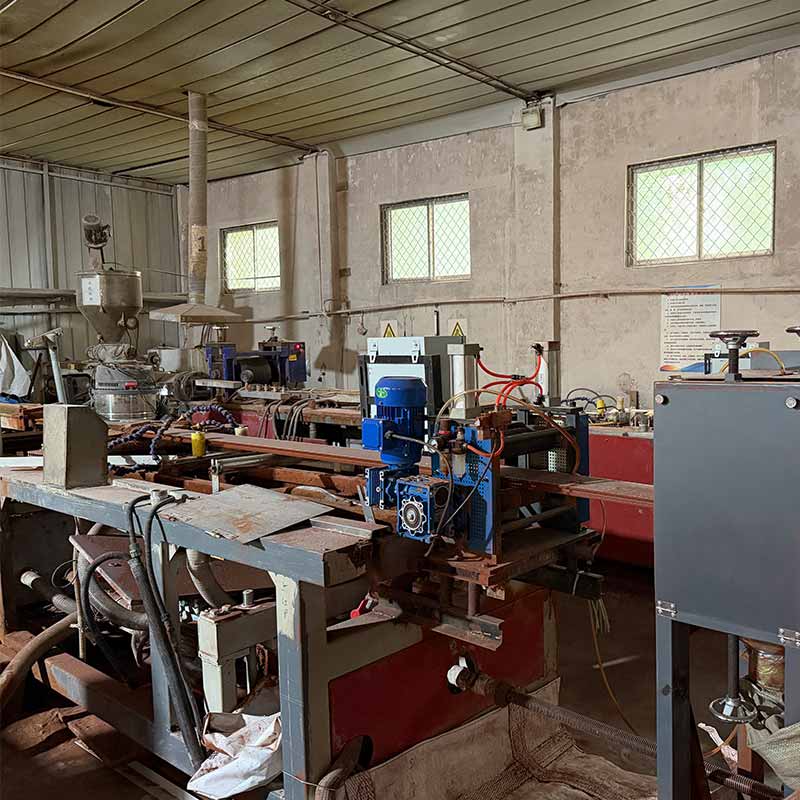
A common purchasing question is: “How do I know whether a WPC supplier is a real factory?”
The answer comes from reviewing company documents, production evidence, technical knowledge, payment information, and independent verification.
Review the Company Profile
Check the company’s legal name, registered address, business scope, factory location, export entity, and payment beneficiary.
The name on the proforma invoice should match the company receiving payment. Any difference should be clearly explained and documented before payment.
Buyers can first review the supplier’s company and production background and then request additional business documents directly.
Request a Live Factory Tour
A live video call is generally more useful than a heavily edited promotional video.
Ask the sales representative to show:
- Raw-material storage
- Mixing equipment
- Extrusion lines
- Cooling and calibration systems
- Molds
- Surface-treatment equipment
- Quality-control areas
- Packing stations
- Finished-product storage
What Should Buyers Look For?
Look for active production, identifiable machinery, production labels, operators, inspection equipment, molds, packaging materials, and products that match the supplier’s catalog.
The representative should be able to explain what happens at each manufacturing stage.
What Is a Warning Sign?
Repeated refusal to show production areas, unclear answers about equipment, or videos that never connect the sales office to the factory deserve further investigation.
These signs do not automatically prove that the supplier is unreliable, but they justify stronger verification.
Factory vs Trading Company
Different supplier models can serve different purchasing requirements.
| Supplier Type | Main Advantages | Possible Limitations | Best Suited For |
|---|---|---|---|
| Direct WPC Manufacturer | Better process visibility, customization, technical communication, and direct pricing | May have a higher MOQ or narrower product range | Regular importers, distributors, contractors |
| Trading Company | Can combine products from multiple factories and coordinate mixed orders | Less direct control over production and batch consistency | Buyers requiring broad sourcing support |
| Manufacturer-Trader Hybrid | Factory capability combined with access to complementary products | Buyers must confirm which products are made internally | Projects requiring WPC products and related accessories |
Do not reject a supplier only because it uses a separate export company. Instead, ask who manufactures the products, who controls quality, who owns the molds, and who is responsible for resolving claims.
Evaluate Raw Materials and Formulation Control
The formulation is one of the most important areas to discuss with a WPC Manufacturer.
Buyers may not receive the factory’s complete confidential recipe, but they should still understand how the supplier controls consistency, traceability, and application suitability.
Wood Fiber or Wood Flour
Ask how the wood fiber is sourced, dried, screened, and stored.
Moisture variation and inconsistent particle size can make extrusion more difficult to control. A professional factory should have defined preparation and inspection procedures.
Polymer Type
Ask whether the polymer system is based on PE, PP, PVC, or another material.
Also confirm whether recycled plastic is used and whether its use is suitable for the selected product, destination market, and project requirements.
Additive Package
WPC formulations may include coupling agents, lubricants, pigments, UV stabilizers, processing aids, and other additives.
Buyers do not need every formula detail, but the WPC Manufacturer should be able to explain which performance objectives the additive system is designed to support.
Batch Traceability
Batch traceability means that the factory can connect finished products to their production date, line, shift, formulation batch, inspection record, and raw-material information.
Ask the supplier to show an example batch number and explain what information can be retrieved from it.
Inspect WPC Manufacturer Production Capability
Producing one attractive sample does not prove that a supplier can maintain the same quality across a large order.
Production capability should be evaluated through equipment, process control, maintenance, capacity, and repeat-order consistency.
Mixing and Compounding
Uniform material preparation helps maintain stable color, extrusion behavior, appearance, and physical properties.
Ask whether mixing parameters are recorded and whether raw materials are prepared through a controlled batch process.
Extrusion Lines and Molds
Confirm the number and type of extrusion lines that can manufacture your selected profile.
Useful questions include:
- Does the factory own the mold?
- Has this profile been produced before?
- How is mold wear monitored?
- How often are dimensions measured?
- Which extrusion line will manufacture the order?
- Is backup capacity available?
Co-Extrusion Capability
Co-extrusion creates an outer protective layer around the composite core.
When a capped product is required, verify that the WPC Manufacturer has the necessary equipment, stable cap-layer control, compatible materials, and experience manufacturing the selected profile.
Surface-Treatment Capability
Embossing, brushing, sanding, online texturing, and post-processing influence the appearance and surface characteristics of the board.
Approve the exact surface code on a signed sample instead of relying on a general description such as “natural wood grain.”
Installed Capacity vs Available Capacity
Installed production capacity is not the same as capacity available for your order.
Ask how much production volume can realistically be allocated during the required delivery period. Peak-season orders, machine maintenance, custom colors, and other projects may affect the schedule.
Check Quality Control at Every Stage
A strong WPC Manufacturer should not rely only on final carton inspection.
Quality control should begin with incoming materials and continue through mixing, extrusion, finishing, packaging, and container loading.
Incoming Material Inspection
Ask what the factory checks when receiving:
- Wood fiber
- Polymer
- Pigments
- Additives
- Packaging materials
- Clips and fasteners
- Aluminum or steel accessories
Request a sample incoming-inspection record rather than accepting the general statement, “We have strict quality control.”
In-Process Inspection
Operators or quality inspectors should monitor product characteristics at defined intervals during extrusion.
Common inspection items include:
- Width
- Thickness
- Length
- Unit weight
- Surface appearance
- Color
- Groove dimensions
- Straightness
- Cap-layer coverage
Ask what happens when a measurement falls outside the approved tolerance.
Finished Product Inspection
Before packing, finished boards should be checked against the approved specification, drawing, and reference sample.
The purchase agreement should clearly define the inspection method and acceptable tolerances.
Dimensional Consistency
Confirm the allowable tolerance for width, thickness, length, groove geometry, and straightness.
These details can influence fastener compatibility, board alignment, expansion gaps, and installation speed.
Color Consistency
Ask how color is controlled between production startup, normal production, different shifts, and repeat orders.
The contract should define how color will be evaluated and what level of variation is acceptable.
Surface and Edge Quality
Inspect products for:
- Scratches
- Bubbles
- Contamination
- Uneven embossing
- Damaged edges
- Incomplete cap layers
- Deformation
- Incorrect cutting
Where possible, classify defects as critical, major, or minor.
Request Relevant Tests and Certifications
Certificates should support a defined purchasing requirement rather than serve as decoration in a sales presentation.
Ask for complete and current documents showing the tested product, test method, laboratory, report date, results, and report number.
Product Performance Testing
Depending on the application, buyers may need to review flexural properties, moisture effects, temperature effects, UV exposure, freeze-thaw resistance, fastener holding, slip resistance, and fire performance.
ASTM D7032 establishes procedures for performance ratings of certain wood-plastic composite and plastic-lumber deck boards, stair treads, guards, and handrails. Buyers can consult the official ASTM D7032 information to understand its scope and determine whether it is relevant to a project.
Quality Management Certification
A management-system certificate does not automatically prove that every delivered board meets the buyer’s specification.
However, a valid certificate can indicate that the company has been assessed against a defined management framework. Verify the certificate number, issuing body, validity period, company name, address, and certification scope.
ISO develops international standards but does not issue certificates directly. Certification is conducted by independent certification bodies, as explained in the official ISO certification guidance.
Responsible Material Claims
When a WPC Manufacturer offers products with FSC claims, confirm that the certification applies to the actual product and sales documentation.
FSC chain-of-custody certification is designed to maintain verified material claims through relevant stages of the supply chain. Buyers can review the official FSC chain-of-custody guidance before accepting a supplier’s environmental claims.
How Can Buyers Verify a Test Report?
Check the following information:
- Laboratory name
- Laboratory accreditation
- Report number
- Issue date
- Product description
- Sample dimensions
- Test method
- Complete result pages
- Manufacturer or applicant name
Contact the laboratory or use its online report-verification system when available.
Order and Evaluate Representative Samples
A sample is essential, but it should be treated as the beginning of supplier verification rather than the end.
The approved sample must be connected to a written product specification that can later be used during production and inspection.
Request the Exact Product
Request the same profile, color, surface, structure, and material system being considered for the order.
A generic sample may demonstrate general workmanship, but it cannot approve a different product.
Measure the Sample
Record:
- Width
- Thickness
- Length
- Unit weight
- Surface code
- Groove dimensions
- Wall thickness
- Visible internal structure
- Packaging condition
Compare the measurements with the technical data sheet and drawing supplied by the WPC Manufacturer.
Conduct Application-Based Checks
Evaluate the sample under conditions related to the intended application.
Depending on the project, buyers may check:
- Cutting quality
- Drilling performance
- Fastener compatibility
- Surface temperature
- Wet-surface traction
- Stain response
- Color appearance
- Edge finishing
- Clip compatibility
Keep an Approved Reference Sample
Sign and date the approved sample and label it with the supplier name, product code, color, surface, and order reference.
Require the factory to keep a matching control sample. This can significantly reduce disputes during production inspection.
Compare WPC Manufacturer Quotations Correctly
“What is a good price for WPC decking?” is a common buyer question, but a unit price has limited meaning without a shared specification.
Two quotations may describe boards with different dimensions, weights, surface treatments, internal structures, packaging, accessories, and commercial terms.
Create an Apples-to-Apples Comparison
Use the same comparison sheet for each WPC Manufacturer.
| Comparison Item | Supplier A | Supplier B | Supplier C |
| Product dimensions | |||
| Unit weight | |||
| Hollow or solid structure | |||
| Surface treatment | |||
| Board price | |||
| Clips and fasteners | |||
| Joists or substructure | |||
| Custom mold or color cost | |||
| Packaging cost | |||
| Loading quantity | |||
| Lead time | |||
| Incoterm | |||
| Warranty terms |
Lowest Price vs Best Value
The lowest price may be acceptable when the technical and commercial scope is genuinely equivalent.
It becomes risky when the quotation reduces board weight, changes the profile, excludes accessories, uses weaker packaging, or relies on an unrealistic production schedule.
Ask What Could Change the Price
A transparent WPC Manufacturer should explain the quotation validity period and the conditions that could affect pricing.
Potential factors include:
- Raw-material costs
- Exchange rates
- Order quantity
- Product dimensions
- Custom colors
- Surface treatment
- Mold development
- Packaging
- Testing
- Shipping terms
Assess Packaging and Export Support
Some product claims are caused by packaging damage, incorrect stacking, deformation, moisture exposure, or missing accessories rather than manufacturing defects.
Packaging and container loading should therefore be reviewed before production begins.
Packaging Design
Request photographs or drawings showing:
- Boards per bundle
- Bundle dimensions
- Pallet design
- Corner protection
- Strapping
- Wrapping
- Labels
- Gross weight
Confirm whether the packages can be handled safely at the destination warehouse or project site.
Container Loading Plan
Ask for an estimated loading quantity and a loading plan, particularly when the order contains several lengths or product categories.
The plan should consider weight distribution, board protection, accessory placement, unloading sequence, and container limitations.
Export Documentation
Confirm which documents the WPC Manufacturer will provide, including:
- Commercial invoice
- Packing list
- Bill of lading instructions
- Certificate of origin
- Product test reports
- Packing declarations
- Project-specific documents
Evaluate Communication and Technical Support
Communication before the order often indicates how the supplier will handle problems after receiving payment.
The best WPC Manufacturer is not necessarily the company that replies fastest. It should provide accurate, consistent, and documented answers.
Technical Clarity
Ask project-specific questions and observe whether the supplier recommends a suitable system rather than simply promoting the most expensive profile.
Useful technical topics include:
- Joist spacing
- Expansion gaps
- Drainage
- Ventilation
- Fastener selection
- Edge finishing
- Installation direction
- Accessory quantities
Quotation Accuracy
Compare the quotation with the drawing, catalog, sample, and email discussion.
Any inconsistency in dimensions, colors, quantities, surfaces, or accessories should be corrected before the deposit is paid.
Installation Support
Ask whether the supplier provides installation drawings, videos, technical sheets, accessory lists, and remote project support.
Buyers can also review the company’s WPC product FAQ when preparing questions about samples, customization, quotations, logistics, and installation.
Complaint Handling
Ask the WPC Manufacturer to explain its written complaint procedure.
The process should define:
- Evidence required
- Response period
- Responsibility assessment
- Replacement options
- Credit arrangements
- Rework procedures
- Shipping responsibilities
A documented procedure is more reliable than a general promise to “solve every problem.”
Use a Trial Order Before Scaling Up
A trial order evaluates more than product quality.
It also reveals how the WPC Manufacturer manages documentation, production updates, inspections, packaging, loading, communication, and unexpected changes.
Set a Clear Trial Objective
Decide whether the order is intended to test:
- A new profile
- A custom color
- A new market
- A new packaging method
- A project application
- The supplier relationship
The trial should be large enough to represent normal production but controlled enough to limit purchasing risk.
Inspect Before Shipment
Use your own team or an independent inspection company to check quantity, workmanship, dimensions, color, packaging, labeling, and container loading.
The inspection checklist should be based on the approved sample and written specification.
Review the Complete Experience
After delivery, evaluate:
- Product condition
- Document accuracy
- Installation feedback
- Defect rate
- Customer response
- Supplier cooperation
- Claim handling
Only then should the buyer consider increasing order volume or granting preferred-supplier status.
WPC Manufacturer Red Flags to Watch
Unusually Low Pricing
A low quotation is not automatically suspicious, but it should be explainable.
Ask which formulation, profile structure, board weight, packaging, and service scope support the price.
Vague Technical Claims
Statements such as “best quality,” “completely waterproof,” and “never fades” should be replaced by specifications, test methods, application limits, and maintenance guidance.
Mismatched Documents
Different company names, expired certificates, unrelated test samples, missing report pages, and inconsistent product codes require clarification before payment.
Unapproved Product Changes
The WPC Manufacturer should not change raw materials, dimensions, structure, surface, color, or packaging without written approval.
Add a formal change-control requirement to the purchase contract.
Pressure for Immediate Payment
Buyers should not skip company verification, sample approval, contract review, or bank-account checks because a salesperson claims that the price will disappear immediately.
Practical WPC Manufacturer Vetting Scorecard
A scorecard helps procurement teams compare suppliers consistently.
| Evaluation Area | Suggested Weight | Main Question |
| Company and factory verification | 15% | Can the company and production location be verified? |
| Product and technical capability | 20% | Can the supplier manufacture the required system? |
| Quality control and traceability | 20% | Are inspections and production records documented? |
| Test and compliance support | 10% | Are reports relevant, current, and verifiable? |
| Pricing and commercial terms | 15% | Is the quotation complete and comparable? |
| Capacity and lead time | 10% | Is sufficient production capacity actually available? |
| Communication and service | 10% | Are technical answers and complaint procedures clear? |
Do not use the score mechanically. A supplier with a high overall score may still be unsuitable if it fails a critical legal, safety, technical, or payment-verification requirement.
Questions to Ask a WPC Manufacturer
“Can you show me the production line that will make my order?”
This connects the quotation to actual production capability.
Ask to see the mold, extrusion line, recent production records, or a similar profile currently being manufactured.
“Which specifications are fixed, and which can be customized?”
The answer should separate standard options from changes requiring a new mold, different formulation, special surface, additional MOQ, or longer lead time.
“How do you keep repeat-order colors consistent?”
Ask about pigment control, batch records, approved reference samples, color measurement, and procedures for repeat orders.
“Which test report applies to this exact profile?”
A useful answer identifies the tested product, standard, report date, laboratory, and any difference between the tested sample and the selected product.
“What usually causes production delays?”
The answer can reveal whether the WPC Manufacturer understands its real production bottlenecks.
Possible causes include raw-material availability, mold preparation, color matching, machine maintenance, peak-season capacity, inspection, and shipping schedules.
“What happens if the pre-shipment inspection fails?”
The supplier should explain how it handles product isolation, rework, replacement, reinspection, schedule changes, and buyer approval.
Conclusion
Choosing the right WPC Manufacturer requires more than finding an attractive product and negotiating a low price.
Effective supplier vetting connects company verification, product requirements, raw-material control, production capability, quality inspection, testing, packaging, realistic capacity, communication, and after-sales responsibility.
The strongest supplier is one that provides consistent evidence at every stage. Define the product clearly, ask specific questions, verify reports, approve representative samples, compare quotations on the same basis, and test the relationship through a controlled order.
For projects involving decking, cladding, fencing, or customized outdoor composite products, buyers can explore Hengyuan’s WPC product categories and contact the project team with the required dimensions, quantity, application, destination, and customization details.
FAQ
How do I choose a WPC Manufacturer for a large project?
Prepare a detailed project requirement, shortlist factories with relevant products, verify company and production information, review samples and reports, compare complete quotations, and arrange a trial order or pre-shipment inspection.
Large projects should also confirm available capacity, packaging, installation guidance, and after-sales support.
Should I visit the WPC factory before ordering?
A physical visit is valuable for large, customized, or long-term purchases.
When travel is not practical, combine a live video audit, third-party verification, document checks, sample evaluation, and pre-shipment inspection.
What documents should I request?
Request company registration information, product specifications, drawings, test reports, relevant certificates, quality records, quotation terms, sample approvals, packaging details, and warranty conditions.
The exact document list depends on the destination market and application.
Is a factory certificate enough to prove product quality?
No. A company-level management certificate and a product-level test report answer different questions.
Buyers should verify both where relevant and confirm that the report applies to the exact product being purchased.
How many WPC samples should I compare?
Most buyers can compare samples from two to four shortlisted suppliers.
Too many unqualified samples create confusion, while too few may hide important differences in structure, weight, surface, dimensions, and workmanship.
What is the best way to compare WPC prices?
Provide every WPC Manufacturer with the same drawing, dimensions, quantity, color, surface, accessories, packaging, delivery terms, and documentation requirements.
Compare total value and purchasing risk rather than only the price per meter or square meter.
Can I place a small trial order?
Many factories accept trial orders, although the MOQ, setup cost, available colors, and unit price may differ from a full-container order.
Define what the trial order must prove before placing it.
How can I reduce problems with repeat orders?
Keep signed samples, drawings, tolerances, color codes, packaging standards, batch requirements, and approved changes in writing.
Require the same specification for every purchase order and inspect repeat production when necessary.