Table of Contents
Introduction
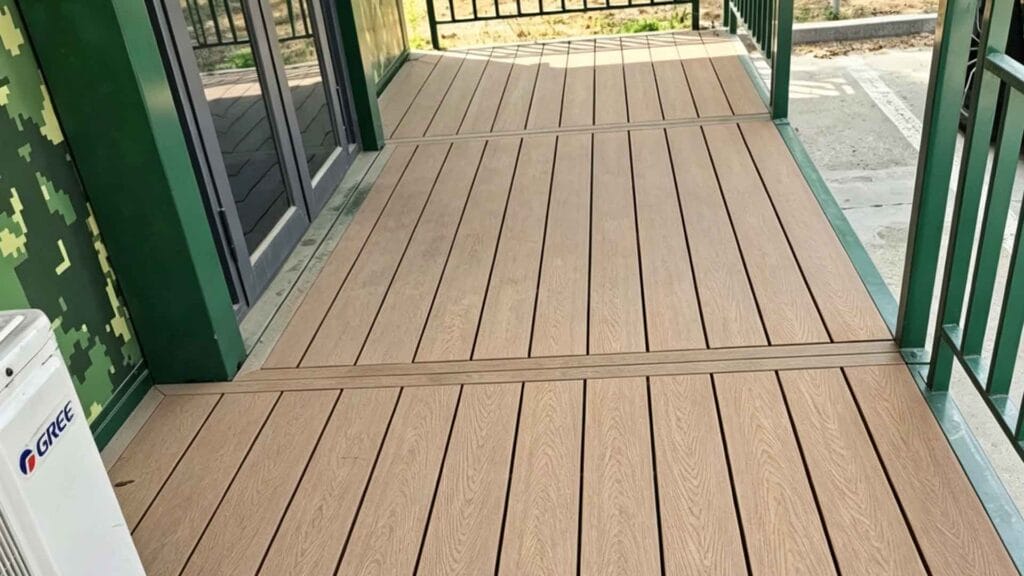
Wet climates place greater demands on outdoor decking than occasional rainfall alone. Frequent moisture, high humidity, slow surface drying, temperature changes, algae growth and repeated wet-to-dry cycles can all influence how a deck performs. A board that works well on a covered residential balcony may not be appropriate for an exposed pool surround, coastal walkway or commercial terrace.
Choosing the best composite deck boards therefore requires more than comparing colors and wood-grain patterns. Buyers, contractors and project designers need to evaluate the board structure, surface protection, drainage design, slip characteristics, supporting system and technical documentation as one complete decking system.
This guide explains how to assess composite decking for wet environments without relying on vague product labels. It also shows which specifications should be checked before selecting boards for patios, gardens, pool areas, hospitality projects and frequently used outdoor spaces.
What Defines the Best Composite Deck Boards?
There is no single composite deck board that is automatically best for every project. The most appropriate product is the one whose structure and installation requirements match the actual environment, expected traffic and supporting framework.
A residential garden deck may prioritize appearance, comfortable walking and straightforward installation. A resort pool surround needs stronger attention to surface grip, drainage and cleaning. A commercial walkway may require a more substantial profile, controlled joist spacing and technical information related to repeated use.
For this reason, the phrase best composite deck boards should describe suitability rather than marketing position. A suitable board should provide consistent dimensions, an appropriate profile, a surface designed for the intended exposure and clear installation guidance from the manufacturer.
How Wet Climates Affect Composite Decking
Wood-plastic composite decking generally contains wood-based material, thermoplastic polymers and performance additives. Although the polymer component helps reduce direct moisture sensitivity compared with untreated timber, the finished decking system still needs to manage water correctly.
Standing water can encourage dirt accumulation and biological surface growth. Poor ventilation beneath the boards may extend drying time, while blocked drainage can leave the substructure continuously damp. Moisture can also enter exposed cut ends or poorly protected interfaces depending on the profile design.
Temperature is another important consideration. Outdoor boards expand and contract as environmental conditions change. If installers leave insufficient gaps or restrict board movement with unsuitable fasteners, dimensional movement can lead to uneven joints, edge pressure or local deformation.
The best solution for a wet site is therefore not simply a board described as waterproof. It is a compatible combination of board, joist, fastener, expansion gap, slope and drainage design.
Solid, Hollow and Reinforced Board Profiles
Composite deck boards are commonly produced in solid or hollow configurations. Hollow boards may use round, square or rectangular cavities, while heavier profiles can incorporate thicker walls and reinforced internal ribs.
Solid boards contain more material throughout their cross-section and may be considered where a project requires a substantial profile or where the board edges and cut sections will remain visible. However, increased board mass does not automatically make a product suitable for every wet-climate installation.
Hollow profiles can reduce board weight and simplify handling. Their performance depends on wall thickness, cavity geometry, internal reinforcement, support spacing and end treatment. A carefully engineered hollow board can be suitable for many terraces, patios and walkways when installed according to its specific requirements.
Hengyuan offers a range of WPC decking profiles that includes hollow, solid, round-hole, square-hole, embossed and co-extruded options. Comparing these profiles by intended application is more useful than assuming that one cross-section is universally superior.
Capped and Uncapped Composite Decking
Surface construction has a major influence on how composite decking responds to moisture, stains, sunlight and routine use. Traditional uncapped WPC has a relatively consistent composition from its surface to its core. It can provide a natural-looking finish, but its exposed surface requires suitable formulation and processing control.
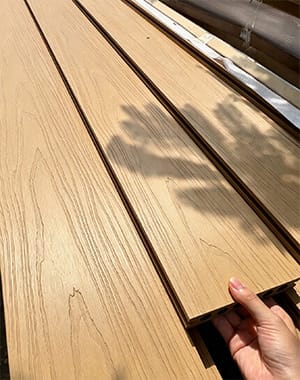
Capped or co-extruded decking adds a protective outer layer during manufacturing. This surface layer can reduce direct exposure of the composite core and may improve resistance to staining, moisture penetration and color change, depending on its formulation and coverage.
Not every capped board is identical. Buyers should confirm whether the protective layer covers the complete profile or only selected surfaces. They should also examine the consistency of the cap, the bond between the surface and core, edge treatment and the suitability of the material for the expected climate.
For constantly exposed environments, co-extruded decking may provide useful surface protection. For covered areas or projects with moderate exposure, a well-made uncapped board may still be appropriate. Selection should be based on project conditions and available technical evidence.
Surface Texture and Slip Considerations
Wet surfaces require careful attention to walking safety. A deep wood-grain or brushed texture may provide more contact variation than a completely smooth surface, but appearance alone does not prove slip resistance.
The direction of the surface pattern, drainage speed, board cleanliness and footwear can all affect grip. Dirt, leaves, grease and biological growth may reduce surface friction even when the original board has a textured finish. Pool surrounds, outdoor dining areas and sloped walkways need particularly careful evaluation.
ASTM International’s ASTM D7032 specification provides a framework for establishing performance ratings for wood-plastic composite deck boards. It addresses areas including flexural behavior, moisture and temperature effects, ultraviolet exposure, freeze-thaw resistance, fastener holding, creep and slip resistance.
When surface safety is important, project teams should request relevant test information instead of accepting general descriptions such as non-slip or all-weather without supporting context.
Drainage and Ventilation Matter as Much as the Board
Even a well-engineered composite board can perform poorly when water cannot leave the deck. The finished surface should direct rainwater away from the building and prevent persistent puddles. The space below the boards should also allow water movement and air circulation.
The supporting base should be assessed before installation begins. Uneven concrete, blocked outlets or an inadequate slope can create water-retention zones beneath the deck. These problems may remain hidden after the boards are installed, making later correction difficult.
Ventilation is particularly important for enclosed balconies, courtyards and low-clearance platforms. Air movement helps the structure dry after rain and reduces the conditions that support mold or algae on surrounding surfaces.
Board gaps must remain open enough to support drainage while following the manufacturer’s installation guidance. Gaps should not be selected according to appearance alone because temperature, board length and local climate can influence required movement allowances.
Profile Strength and Supporting Structure
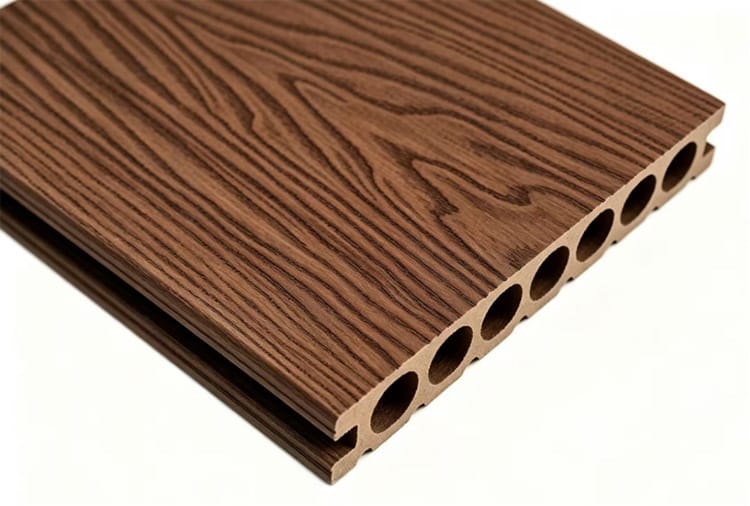
A board should always be evaluated together with the joist system beneath it. Overall thickness, cavity design, internal ribs and material formulation influence how the profile behaves between supports, but joist spacing determines the span the board must bridge.
Residential decks with controlled pedestrian use may use different supporting arrangements from hotel terraces, public walkways or frequently used commercial spaces. Heavy furniture, planters, service carts and concentrated loads should also be considered during project planning.
For demanding outdoor applications, Hengyuan’s Heavy Duty WPC Decking uses a 140 × 25 mm profile with seven round holes and a 3D wood-grain embossed surface. These specifications provide a clear starting point for evaluation, but the final selection should still consider support spacing, expected use and site conditions.
The following table summarizes the main considerations for different applications.
| Application | Main Exposure | Selection Priority | Installation Focus |
|---|---|---|---|
| Residential patio | Rain, humidity and furniture | Appearance, dimensional consistency and cleaning | Drainage, ventilation and board gaps |
| Pool surround | Frequent water and barefoot traffic | Surface texture and moisture exposure | Slope, drainage and regular cleaning |
| Rooftop terrace | Sun, rain and temperature change | UV exposure and dimensional movement | Substructure, expansion space and wind conditions |
| Commercial walkway | Repeated pedestrian use | Profile strength and surface wear | Joist spacing and fastening |
| Coastal project | Humidity, salt and strong sunlight | Surface protection and compatible accessories | Ventilation and corrosion-resistant fixings |
| Garden path | Soil moisture and organic debris | Cleaning access and suitable profile | Ground separation and water flow |
Fasteners, Clips and Edge Details
Composite decking is normally installed as a system rather than as isolated boards. Clips, screws, starter fasteners, joists, edge boards and end treatments all influence the finished result.
Fasteners should be compatible with the installation environment. Humid and coastal locations may require greater attention to corrosion resistance. Clips should hold the boards securely while allowing the movement anticipated by the installation design.
Board ends also need proper support. Unsupported ends may move or become vulnerable to impact, while poorly planned cuts can disrupt alignment and drainage. When hollow boards are used, appropriate end caps or finishing details can improve appearance and reduce debris entering the cavities.
Edge treatment should be planned before board quantities and substructure positions are finalized. This avoids improvising with unsuitable screws or unsupported trim pieces during installation.
How to Evaluate Manufacturer Documentation
Professional selection should be based on information that can be checked. A reliable technical discussion should identify the board dimensions, profile structure, surface process, available lengths, intended applications and installation requirements.
For larger or more demanding projects, buyers should request information relevant to:
- Board width, thickness and length
- Hollow or solid cross-section
- Wall thickness and internal rib design
- Surface construction and embossing
- Recommended joist spacing
- Expansion and end-gap guidance
- Compatible clips and fasteners
- Cleaning and maintenance instructions
- Relevant physical or mechanical testing
- Packaging and storage requirements
A sample can help assess color, texture and surface consistency, but it cannot independently demonstrate long-term structural performance. Samples should therefore be considered together with specifications and technical documentation.
Common Claims That Require Closer Examination

Terms such as waterproof, maintenance-free, fade-proof and heavy duty are frequently used in decking descriptions. These terms should be interpreted carefully because outdoor performance depends on exposure, installation and maintenance.
Composite decking still requires cleaning, especially in shaded or humid spaces where organic debris can remain wet. Color appearance can change gradually under outdoor exposure, and no decking surface should be assumed to remain completely free from staining or wear.
Similarly, heavy duty is not a complete engineering specification. Buyers should examine profile dimensions, internal construction, support requirements and intended application. A thicker board may offer a more substantial cross-section, but the complete system determines whether it is suitable for a particular project.
Clear, limited and verifiable claims are more useful than absolute statements. They allow contractors and project planners to compare products using practical requirements rather than promotional wording.
Cleaning and Long-Term Care in Wet Environments
Routine cleaning helps preserve the appearance and walking surface of composite decking. Leaves, soil and food residue should not be allowed to block drainage gaps or remain on the boards for extended periods.
Cleaning methods should follow the product guidance. Excessively aggressive tools or unsuitable chemicals may alter the surface finish. Before using a new cleaning product, it is sensible to test it on a small, less visible area.
Periodic inspection should include the drainage paths, board gaps, fasteners, edge details and supporting structure. Early correction of blocked drainage or loose components is easier than repairing a larger area after continued exposure.
Composite decking can reduce several maintenance tasks associated with natural timber, but low maintenance does not mean no inspection. A simple, regular care routine remains part of a well-managed outdoor deck.
Conclusion
The best composite deck boards for wet climates are not identified by color, thickness or a single marketing claim. A reliable choice results from matching the board profile, surface construction, supporting system and installation details to the actual project environment.
Wet-climate selection should focus on moisture management, drainage, ventilation, surface grip, dimensional movement, profile strength and verifiable technical information. Capped, uncapped, solid and hollow boards can each be appropriate when their characteristics align with the intended application.
By evaluating the complete decking system instead of the board alone, project teams can make a more informed selection for patios, pool surrounds, rooftop terraces, commercial walkways and other exposed outdoor spaces.
Frequently Asked Questions
What are the best composite deck boards for rainy climates?
Suitable boards should have an appropriate outdoor formulation, consistent profile construction and a surface designed for the expected exposure. Drainage, ventilation, joist spacing and installation gaps are equally important.
Are solid composite deck boards better than hollow boards?
Not necessarily. Solid and hollow boards serve different project requirements. A reinforced hollow profile can work well when properly supported, while a solid profile may suit applications requiring a more substantial cross-section.
Is capped composite decking suitable for pool areas?
Capped decking may provide additional surface protection, but poolside suitability also depends on surface grip, drainage, cleaning, fastener compatibility and correct installation.
Does composite decking need maintenance in humid climates?
Yes. Composite decking generally requires less routine treatment than natural timber, but it still needs cleaning and inspection. Drainage gaps should remain clear, and organic debris should be removed regularly.
What information should be checked before selecting composite decking?
Check the board dimensions, profile structure, surface process, recommended joist spacing, expansion guidance, fastener system, intended application and available technical test information.
Need Help Choosing Composite Deck Boards?
Selecting decking for a wet or high-traffic environment requires careful coordination between the board profile, substructure and installation conditions. Contact Hengyuan WPC to discuss the application, required dimensions, surface options and suitable decking configuration.