Table of Contents
Key Takeaways
- Co-extrusion forms a protective polymer cap and a wood-plastic composite (WPC) core together. The cap can reduce moisture uptake through the faces it covers and make everyday cleaning easier.
- Before ordering, confirm which faces are capped and request weathering data and installation instructions for the exact profile.
- Capped WPC is worth comparing for exposed terraces, commercial walkways and façades. A suitable uncapped profile can serve sheltered areas with lighter traffic.
Comparing materials for an outdoor project? Ask Hengyuan for profile samples and technical details.
What Is Co-Extrusion in WPC?
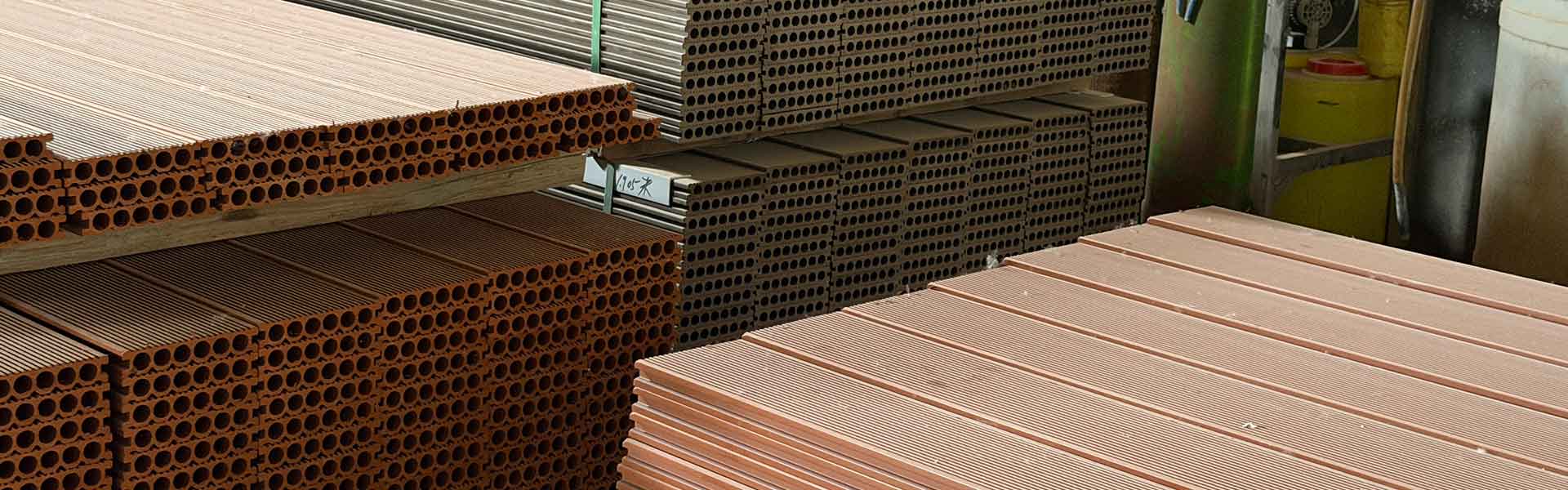
Two decking boards can look almost identical on a showroom rack. Put them on a terrace where rain collects around planters and afternoon sun hits the same boards every day, and the way each surface is made starts to matter. The easiest place to see the difference is a clean cross-section.
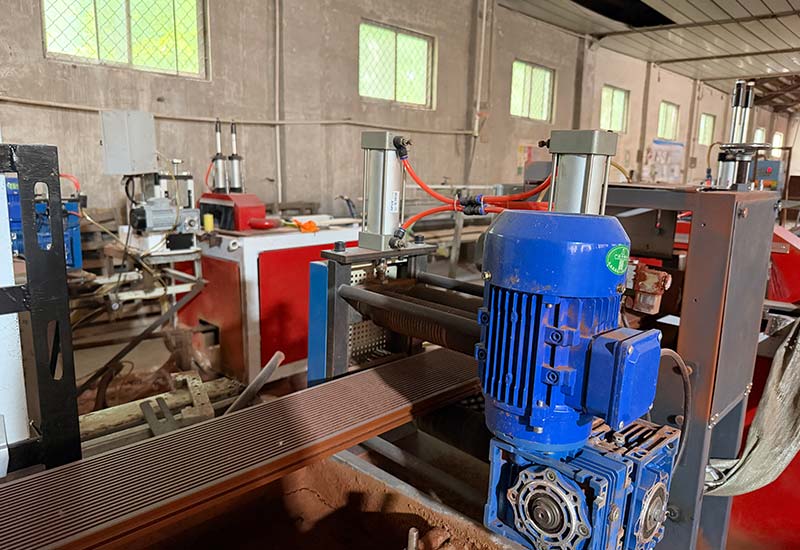
Conventional extrusion shapes a single WPC compound into a board or panel. The surface can be embossed or brushed to create a wood-like finish. With co-extrusion, the composite core and a separate polymer cap pass through the die together and form one profile. In product catalogs, these materials are often described as capped WPC, capped composite decking or co-extruded cladding.
The cap gives the board its exposed finish and adds a protective layer on the faces it covers. The core and profile geometry help determine how the board carries load. A hollow board and a solid board can have similar finishes and still need different support spacing.
Where a Co-Extruded Cap Makes a Difference
Color retention in direct sunlight
On a sun-facing façade or open terrace, weathering can be most noticeable where a sheltered area meets a fully exposed one. A cap formulated for outdoor use can help limit visible color change. When comparing products, ask for the weathering test method, exposure duration and measured color change for the finish you plan to order. Compare results obtained under similar test conditions.
Moisture uptake during wet seasons
A cap can reduce moisture entering through the faces it covers. Cut ends, joints and uncovered surfaces still deserve attention, particularly where water drains slowly. Laboratory trials found that the capped WPC samples tested absorbed less moisture and that weathering results varied with the cap material. See the USDA Forest Products Laboratory study on co-extruded WPC.
For a deck in a rainy climate, check where water goes after it passes through the gaps. A raised deck over a clear drainage path dries differently from one installed over a recess that stays damp. For a project with freezing conditions, ask for relevant test data for the proposed profile and review the supplier’s installation guidance for that exposure.
Stains, scratches and routine cleaning
At a café terrace, a useful comparison is how two finishes respond to a spilled drink, muddy shoes and regular cleaning. A polymer cap can make everyday stains easier to remove. The result depends on the surface texture, cap formulation and cleaning method. Compare samples using the same stain, contact time and approved cleaning procedure.
Chair legs, sand and heavy planters can still mark the surface. If wet-slip performance matters, request test results for the actual finish and texture you plan to install.
Board alignment and movement
Reducing moisture uptake can help limit moisture-related dimensional changes. Temperature changes still affect the installed boards. For long runs and evenly spaced joints, ask for the recommended end gaps, perimeter clearances, fastening details and maximum joist spacing. Check those dimensions against the layout before the first boards are cut.
Co-Extrusion vs. Conventional WPC at a Glance
| Factor | Co-extruded WPC | Conventional WPC |
|---|---|---|
| Surface construction | Separate polymer cap on specified faces | Exposed WPC compound with the selected finish |
| Weathering | Compare test results for the cap and finish | Compare test results for the exposed compound |
| Moisture | Cap can reduce moisture uptake through covered faces | Moisture uptake depends on formulation and exposure |
| Cleaning | Check stain response and approved cleaning methods | Check stain response on the actual surface texture |
| Installation | Confirm cap coverage, support spacing, fasteners and gaps | Confirm support spacing, fasteners and gaps |
Where Capped WPC Makes Sense Outdoors
Open terraces, hospitality decks and pool surrounds
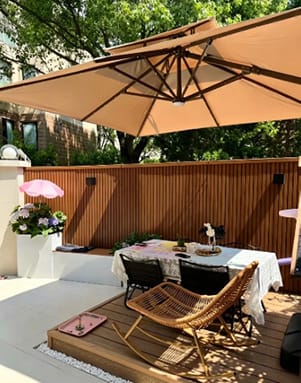
For an exposed hotel terrace or café deck, consider how often staff will need to clean the surface and what stains they are likely to deal with. Pool surrounds add frequent wetting and may have specific slip requirements. Review the surface texture, drainage plan and maintenance routine together before approving a finish. Browse Hengyuan’s outdoor WPC decking profiles to compare solid and hollow options.
Exterior walls and covered ceilings
For a visible façade, look at samples in outdoor light and review how the installer will finish corners, exposed edges and transitions around openings. Ask which profiles are designed for direct exposure and confirm their fixing, drainage and ventilation details. For soffits and covered ceilings, check the overhead fixing method and support spacing. Explore exterior WPC cladding and wall and ceiling cladding profiles.
Sheltered outdoor spaces
A covered patio with light foot traffic may place fewer demands on color retention and cleaning than an open commercial deck. Compare an outdoor-grade uncapped profile alongside a capped sample. Look at the actual exposure, the desired finish and how the space will be maintained before choosing a profile.
How to Verify a Co-Extruded Profile Before Ordering
- Examine a clean cross-section. Ask for a cut sample of the quoted model and a drawing that identifies the capped faces. Some caps contrast with the core, while color-matched layers can be harder to distinguish.
- Confirm the cap material and coverage. Ask whether the cap covers the top and edges or wraps around the underside as well. Check the fixing grooves and cut ends separately. For a product example, see Hengyuan’s ASA Co Extrusion Decking.
- Match the test report to the quoted model. Check the product reference, profile and finish where relevant. Ask for the method, conditions and results behind claims about weathering, water absorption or wet-slip performance.
- Request a comparable project reference. Ask for the installation date, climate and photos that show the surface and fixing details. A project with similar exposure and maintenance is more useful for comparison than a newly installed display.
What to Include in a Project Specification
Give each supplier the same brief. Include the project location, application, approximate quantity, exposure to sun and rain, and any requirements for slip resistance or appearance. For decking, share the proposed support layout and expected foot traffic. For cladding, share the wall assembly, fixing substrate and areas exposed to wind-driven rain.
Record the approved profile, dimensions, finish, cap coverage, compatible fasteners and installation clearances in the purchasing documents. If the project calls for a decking performance reference, ASTM D7032 covers performance ratings for products including WPC deck boards and stair treads. Ask what documentation is available for the proposed model and confirm which requirements apply in the project market.
Where appearance matters across several elevations or long board runs, approve a physical sample in daylight. An installed mock-up also lets the project team see how board ends, trims and visible fixings fit together before bulk installation.
Frequently Asked Questions
Is co-extruded WPC waterproof?
A polymer cap helps reduce moisture uptake through the faces it covers. Water can still reach the core through cut ends or uncovered faces, and standing water can collect around an installation. Check the product’s water absorption data and follow the supplier’s guidance on drainage, ventilation and end details.
Will capped composite decking fade in direct sun?
Color can change with exposure, and the amount depends on the finish, cap formulation and site conditions. Ask for weathering results for the color you intend to order, including the test method and exposure duration. For large projects, review a sample or mock-up outdoors before approving the finish.
How can I tell which faces of the board are capped?
Look at a clean cross-section and compare it with a drawing that marks the capped faces. Cap and core colors can be similar, so color alone can be misleading. Request confirmation for the exact model and ask how cut ends, edges and fixing grooves are handled during installation.
Does capped WPC still need expansion gaps?
Yes. WPC boards can change dimensions as temperatures shift. Follow the manufacturer’s instructions for the exact profile, board length and site conditions. Pay particular attention to butt joints, clearances around walls and columns, and fixing details that control how the board moves.
Can capped WPC decking and cladding use the same installation details?
Use the installation guide for each profile. Decking needs support and fixings suited to foot traffic. Cladding attaches to a wall assembly with its own support, fixing and drainage details. For a coordinated finish across both applications, request paired samples and separate installation drawings.
Request Samples for Your Outdoor WPC Project
A sample lets you compare the finish in daylight, check the capped faces and see how the profile fits your project details. Contact Hengyuan for samples and technical information and share your application, project location, estimated quantity and preferred color. If you have drawings or performance requirements, include them so we can help you compare suitable decking or cladding profiles.